
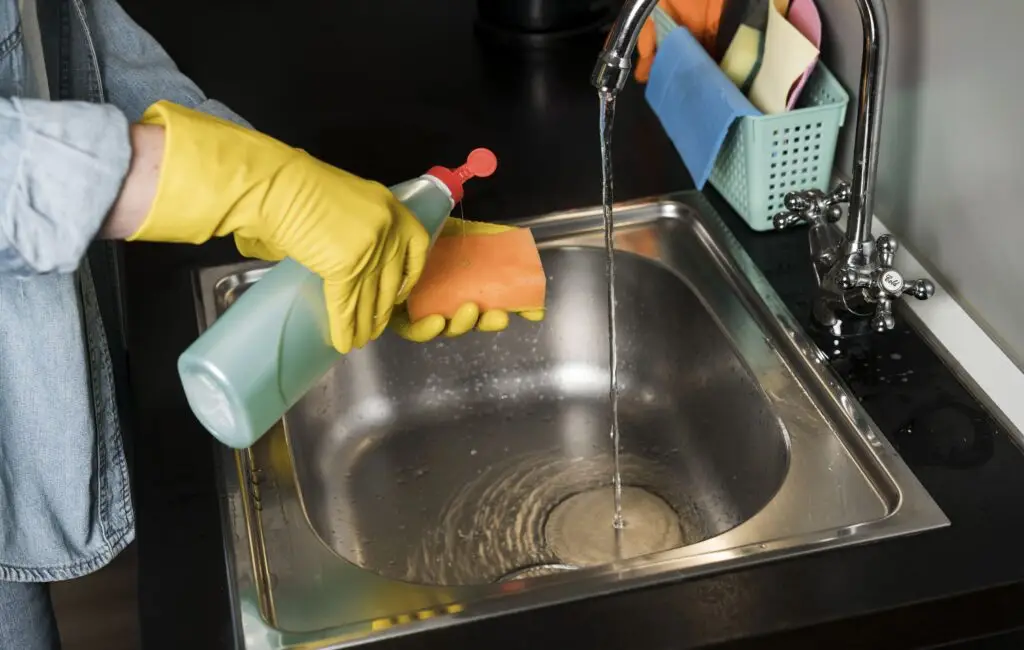
A stainless steel sink is the undisputed workhorse of the modern kitchen. It is durable, heat-resistant, and sleek, but it is not completely immune to damage. Over time, hard water, cooking oils, and acidic foods can leave your sink looking dull, scratched, and stained.
Choosing the right cleaner is about more than just aesthetics; it is about protecting the chromium oxide “passive layer” that keeps your stainless steel from rusting.
In this expert guide, we will break down the best cleaning options, provide a step-by-step restoration routine, and highlight the chemical hazards you must avoid to keep your sink in pristine condition.
What Is the Best Cleaner for Stainless Steel Sinks?
The absolute best cleaner for a stainless steel sink depends on whether you are doing a quick daily wipe-down or treating a severely oxidized, stained basin.
Daily cleaning vs. deep cleaning products
For daily maintenance, a simple mixture of mild dish soap and warm water is the safest, most effective option. It emulsifies surface grease and oils without leaving a film or attacking the metal.
For weekly deep cleaning and stain restoration, a mild abrasive like baking soda or a specialized oxalic-acid cleaner like Bar Keepers Friend is the industry gold standard. These products break down mineral scale and rust without scratching the underlying metal.
Why stainless steel needs non-damaging cleaners
Stainless steel’s “stainless” property comes from a microscopic layer of chromium oxide on its surface. When you use harsh abrasives (like wire brushes) or corrosive chemicals (like chlorine bleach), you strip this protective shield. Once compromised, the exposed iron in the steel reacts with water and oxygen, leading to permanent pitting, rusting, and cloudiness. Non-damaging, pH-balanced, or specialized acidic cleaners preserve this invisible barrier.
Best Cleaning Options for Stainless Steel Sinks
To maintain a showroom-quality kitchen, you should categorize your cleaning agents based on their chemical properties and intended frequency:
THE STAINLESS STEEL PROTECTION CYCLE
[DAILY RESET] [WEEKLY SCRUB] [MONTHLY SHINE]
Dish Soap + Warm Water Baking Soda Paste Bar Keepers Friend
Wipes away surface grease. Lifts micro-debris. Restores chromium luster.
Dish soap and microfiber for daily cleaning
Standard liquid dish soap (like Dawn) is formulated with powerful surfactants designed to break down animal fats and vegetable oils on contact. Paired with a soft microfiber cloth, this daily combination removes food residue and keeps grease from polymerizing into a sticky, dust-attracting film.
Baking soda paste for gentle scrubbing
Baking soda (sodium bicarbonate) has a Mohs hardness rating of 2.5, while stainless steel typically ranks between 5.5 and 6. This means baking soda is physically incapable of scratching your sink, making it the perfect gentle abrasive to polish away dried food particles and neutralize organic sink odors.
Bar Keepers Friend for stains and discoloration
For tough rust spots, hard water rings, or “rainbow” heat stains, Bar Keepers Friend is highly recommended by professionals. Its active ingredient, oxalic acid, is a natural organic acid that chemically targets and dissolves iron oxide (rust) and calcium deposits, lifting them from the surface without requiring heavy physical scrubbing.
Stainless steel polish for shine
Commercial polishes (often containing mineral oils or silicones) do not clean the sink, but they do provide a temporary hydrophobic (water-repellent) barrier. This causes water to bead up and roll off the metal, significantly reducing the formation of white limescale spots.
| Cleaning Agent | Primary Active Ingredient | pH Level | Best For… | Frequency |
| Dish Soap | Surfactants | Neutral (7.0) | Removing oils, fats, and daily food film | Daily |
| Baking Soda | Sodium Bicarbonate | Mildly Alkaline (8.3) | Gentle scrubbing, deodorizing, food spills | 2–3 times a week |
| Bar Keepers Friend | Oxalic Acid | Acidic (1.5–2.0) | Rust spots, mineral scale, restoration | Weekly / Monthly |
| Mineral Oil | Petroleum Distillates | Neutral | Enhancing shine, water-beading barrier | Monthly |
How to Clean a Stainless Steel Sink Step by Step
Follow this systematic, professional sequence to safely restore your sink’s original brilliance.
1. Rinse debris
Clear out the drain strainer. Flush the entire basin with warm water to remove loose crumbs, sand, or grit. If you skip this step, those tiny loose particles will act like sandpaper under your sponge, creating micro-scratches.
2. Clean with the grain
Look closely at your sink’s surface to identify the directional brushed lines in the metal (the grain). Always scrub parallel to this grain. Scrubbing across the grain—even with a soft sponge—creates microscopic cross-hatched scratches that trap light and make the metal look cloudy.
3. Treat stains
If you have rust spots or white hard water rings, sprinkle baking soda or apply a small amount of Bar Keepers Friend directly to the damp metal. Use a damp, non-scratch sponge to gently rub the paste along the grain. Let it sit (dwell) for no more than 1 to 2 minutes to let the chemistry break down the stains.
4. Rinse and dry completely
Rinse the entire sink thoroughly with warm water, ensuring no white powder remains in the corners or around the drain flange. Immediately buff the entire basin dry with a clean, dry microfiber towel. Drying is the single most important step—if you let the water air-dry, you are simply leaving minerals behind to form new cloudy spots.
What Not to Use on Stainless Steel Sinks
Avoid these highly damaging materials that can cause permanent, non-repairable degradation to your sink:
Toilet bowl cleaner
Never let toilet bowl cleaner touch your sink. These formulas contain highly concentrated hydrochloric acid (up to 12%). This aggressive acid will instantly strip the chromium oxide layer from the stainless steel, causing severe chemical burns, blackening, and immediate rust.
Bleach exposure
While chlorine bleach (sodium hypochlorite) is an excellent disinfectant, it is highly corrosive to stainless steel. The chlorine ions chemically react with the metal, leading to a process called pitting corrosion—microscopic holes in the steel that weaken its structure and cause permanent grey discoloration. If you must use bleach to sanitize, dilute it heavily and rinse it away completely within two minutes.
Steel wool and abrasive pads
Never use traditional steel wool, metal wire brushes, or green scouring pads. Steel wool leaves behind microscopic carbon steel fibers that embed themselves in the stainless steel. Within days, these foreign fibers will rust, making your sink look like it is decaying. Green scouring pads are made with synthetic abrasives that are harder than stainless steel and will permanently scratch and dull the finish.
How to Prevent Water Spots and Scratches
Preventative maintenance is the secret to a long-lasting, showroom-ready kitchen sink.
Drying after use
Water spots are simply the mineral remnants (calcium and magnesium) left behind when tap water evaporates. Keeping a dry microfiber cloth next to your sink and spending 10 seconds wiping the basin dry after your final dish of the night will eliminate 90% of water spots entirely.
Using sink grids
Stainless steel will scratch over time with heavy daily use. To prevent heavy pots, pans, and cutlery from scratching the bottom of the basin, place a stainless steel protective grid at the bottom of your sink. Ensure the grid has rubber feet to prevent it from sliding and scratching the metal.
Weekly maintenance
Set aside time once a week to do a quick baking soda scrub and a thorough rinse-and-dry. This prevents light mineral film from hardening into tough limescale that requires aggressive chemical intervention to remove.
FAQ
What cleaner is safe for stainless steel sinks?
Any pH-neutral dish soap, baking soda, or mild, non-abrasive cream cleaners are completely safe. Always verify that any commercial cleaner you use is explicitly labeled “safe for stainless steel.”
Can Bar Keepers Friend be used on stainless steel sinks?
Yes. It is highly recommended. The oxalic acid in Bar Keepers Friend dissolves rust and hard water mineral bonds on a molecular level without scratching the protective factory finish of the steel.
How do I make my stainless steel sink shine?
After cleaning and drying the sink, apply a single drop of food-grade mineral oil or olive oil to a clean, dry microfiber cloth. Buff it across the metal in the direction of the grain. This creates a hydrophobic barrier that makes water bead up and adds a deep, mirror-like glow.
Does vinegar damage stainless steel?
Only if left to sit. Distilled white vinegar is a mild acetic acid (pH ~2.5), which is highly effective at dissolving hard water spots. However, you should never let vinegar puddle or sit on stainless steel for extended periods (such as overnight), as prolonged acid exposure can eventually dull the finish. Always rinse and dry the sink after using vinegar.
What should never be used on stainless steel?
You should never use steel wool, hydrochloric acid (toilet bowl cleaner), undiluted chlorine bleach, or highly abrasive scouring powders (like Comet or Ajax) on a stainless steel sink.
Reclaim Your Kitchen’s Polish with Fabro Cleaning
You don’t have to spend your limited weekends scrubbing grease, polishing metal, and fighting hard water stains in your kitchen and bathrooms. At Fabro Cleaning, we serve busy homeowners across Pennsylvania with elite-level training, advanced microfiber technologies, and a strict commitment to family-safe, material-specific chemistry.
We take the stress out of home maintenance, keeping your high-end finishes, natural stones, and stainless steel appliances clinically sanitized and beautifully preserved.
Ready to experience the ultimate peace of mind?
Get Your Personalized, No-Obligation Cleaning Estimate Today! | Explore Our Recurring Cleaning Packages