
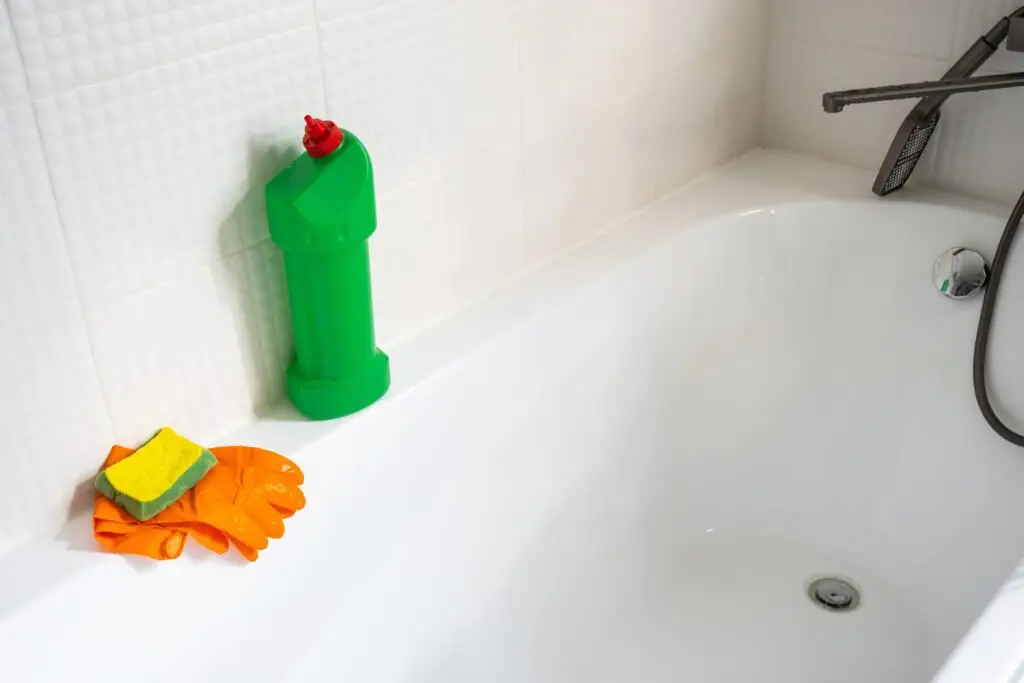
Keeping a bathtub sparkling is about more than just finding the strongest cleaner—it’s about finding the right one for your specific tub material. Using the wrong product can etch finishes, cause permanent discoloration, and lead to more frequent scrubbing in the future.
What Is the Best Tub Cleaner?
Why the best cleaner depends on tub material
There is no “one-size-fits-all” solution. Acrylic, fiberglass, and enameled iron have different chemical sensitivities. A cleaner that is safe for porcelain may ruin an acrylic finish by causing it to cloud or yellow over time.
Everyday cleaning vs deep stain removal
- Everyday: Use gentle, surfactant-based cleaners or simple dish soap to maintain the finish.
- Deep Stains: Reserve heavy-duty cleaners (like specialized mineral removers) only for occasional use on the specific type of buildup you are facing.
Best Cleaner by Tub Type
- Acrylic tubs: Use non-abrasive, pH-neutral cleaners. Avoid anything with ammonia or harsh abrasives.
- Fiberglass tubs: These are prone to scratching. Use mild, non-abrasive liquid cleansers or specialized “shower and tub” sprays.
- Porcelain tubs: Durable and heat-resistant. They can handle slightly stronger cleaners, but still avoid harsh acids or abrasive pads that can wear down the enamel.
- Enamel tubs: Similar to porcelain, these require non-abrasive cleaners. Avoid steel wool and heavy scrubbing to keep the glossy finish intact.
Best Tub Cleaners for Common Problems
- Soap scum: Use products containing surfactants or mild citrus enzymes.
- Hard water stains: A dedicated mineral deposit remover labeled as “safe for [your tub material]” is best.
- Mildew-prone areas: Look for cleaners with hydrogen peroxide or mild bleach-free fungicidal agents.
- Rust marks: Use specialized rust removers meant for bathroom fixtures. Ensure they are compatible with your tub surface before applying.
Tub Cleaning Products to Avoid
- Toilet bowl cleaner: Formulated with harsh acids that can ruin tub finishes.
- Abrasive powders: Scouring powders (like some heavy-duty scrubbing cleaners) create microscopic scratches that attract dirt.
- Harsh chemical mixing: Never mix bleach with ammonia or acid, as this creates toxic fumes.
Step-by-Step Bathtub Cleaning Method
- Pre-rinse: Spray the tub with warm water to loosen surface dirt.
- Apply safe cleaner: Apply your chosen, material-appropriate cleaner.
- Let it sit: Allow the product to dwell for 5–10 minutes to break down grime.
- Scrub gently: Use a non-scratch microfiber cloth or soft sponge. Avoid steel wool or stiff-bristled brushes.
- Rinse and dry: Rinse thoroughly with warm water and wipe dry with a clean cloth to prevent mineral spotting.
FAQ
What is the best cleaner for a stained bathtub?
For most stains, a paste of baking soda and water or a mild, pH-neutral bathroom cleaner is the safest starting point.
How do professionals clean bathtubs?
Professionals use high-quality, non-abrasive cleaners and specialized tools that lift grime without damaging the protective glaze of the tub.
What removes soap scum from tubs?
Surfactant-heavy cleaners or specialized soap scum removers (check the label for “safe for acrylic/fiberglass”) are most effective.
Is vinegar safe for all tubs?
Vinegar is acidic. While often safe for porcelain in moderation, it can damage natural stone and should be avoided or used with extreme caution on sensitive finishes.
How often should a tub be cleaned?
A quick weekly rinse-and-wipe prevents scum buildup, while a deep clean should occur every 2 to 4 weeks depending on usage.
Professional Bathroom Care with Fabro Cleaning Services
Keeping a bathroom in top condition takes time and the right techniques. At Fabro Cleaning Services, we specialize in professional, detail-oriented cleaning that protects your home’s surfaces while delivering a pristine, sanitized finish.
Whether you need a one-time deep clean or recurring maintenance for your apartment or commercial space, our team is here to help.
Request Your Free Cleaning Quote Today! | Contact Fabro Cleaning Services