
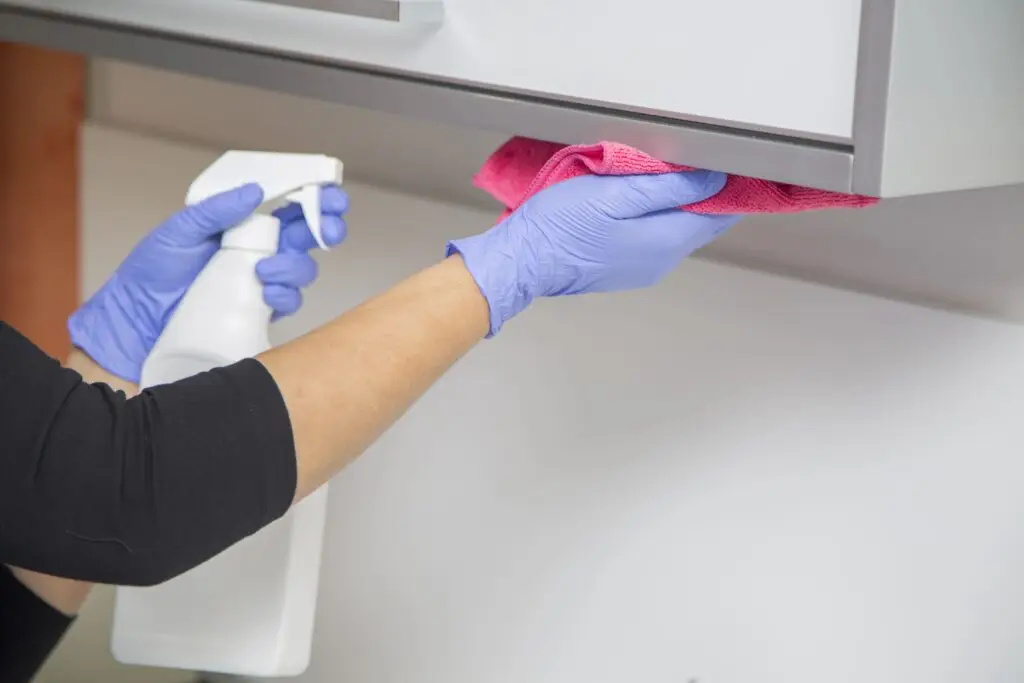
Kitchen cabinets are notorious for collecting a thin layer of “grease film”—a sticky combination of airborne oil particles, dust, and steam. Over time, this thickens into a stubborn residue that can dull your finish and attract even more grime.
The secret to cleaning them safely is knowing that “more” isn’t always “better.” Aggressive scrubbing or harsh chemicals can strip varnish or ruin paint. Here is how to restore your cabinets effectively without causing damage.
Why Kitchen Cabinets Get Sticky and Greasy
When you cook, oil particles become airborne. As they cool, they settle on the nearest surfaces, specifically your cabinet fronts. Because these particles are sticky, they trap household dust and debris, creating a layer that dish soap alone often can’t penetrate if it’s been left for months or years.
Quick Answer: Best Way to Clean Greasy Cabinets
For most cabinets, the safest and most effective method is a warm water and mild dish soap solution. Dawn Platinum is widely considered the gold standard for breaking down grease molecules quickly while remaining gentle on wood and paint finishes.
What to Use on Greasy Kitchen Cabinets
- Mild Dish Soap: The safest pH-balanced choice for wood, laminate, and painted surfaces.
- Microfiber Cloths: These are essential because they trap grease rather than just smearing it around.
- Degreaser (For Heavy Buildup): Only use commercial degreasers (like Murphy Oil Soap or specialized kitchen degreasers) if soapy water fails. Always test on an inconspicuous spot first.
- What to Avoid: Stay away from vinegar, lemon juice, ammonia, and abrasive scouring pads. These can etch finishes, dull the sheen, or cause dark staining on wood.
How to Clean Greasy Cabinets Step by Step
- Dust First: Use a dry microfiber cloth to remove loose dust. Cleaning over dust creates a muddy paste that is much harder to wipe away.
- Test a Small Area: Always test your cleaning solution on the inside of a cabinet door to ensure it doesn’t discolor the finish.
- Wipe With the Grain: If you have wood cabinets, always wipe in the direction of the wood grain to avoid highlighting fine scratches.
- Rinse and Dry: This is the step most people skip! Wipe the surface with a separate cloth dampened only with water to remove soap residue, then immediately buff dry with a clean, dry towel. Never let water air-dry on cabinet surfaces, as it can lead to swelling or water spots.
Tips for Specific Finishes
- Wood Cabinets: Stick to mild dish soap or Murphy Oil Soap. Avoid vinegar or baking soda, which can be corrosive to wood sealants and stains.
- Painted Cabinets: Painted surfaces are often more prone to “scrubbing off” if you use harsh chemicals. Stick to a soft cloth and a gentle circular motion. If the grease is hardened, let a warm, soapy cloth sit on the spot for 30 seconds to “soften” the grease before wiping.
How to Prevent Grease Buildup
- Weekly Maintenance: Don’t wait for a “deep clean.” A quick wipe-down of the cabinet fronts near the stove once a week takes seconds and prevents the film from ever thickening.
- Use Your Range Hood: Always turn on your exhaust fan before you start cooking and leave it on for 5–10 minutes after you finish.
- Cooking Habits: Use a splatter screen over your pans to stop oil from becoming airborne in the first place.
- Parchment Paper Hack: For the top of cabinets (which are hard to reach), lay down sheets of parchment paper. Every few months, simply remove the dusty, greasy paper and replace it with fresh sheets.
FAQ
What dissolves grease on kitchen cabinets?
Mild dish soap (like Dawn) is the best degreaser because it is specifically formulated to break down grease bonds. For extremely stubborn cases, a citrus-based degreaser can be used, provided it is pH-neutral.
Does vinegar remove grease from cabinets?
While often recommended online, avoid vinegar. It is acidic and can eat away at the clear coat or varnish on wood cabinets over time, eventually leading to a dull or damaged appearance.
Can baking soda damage wood cabinets?
Yes. Baking soda is mildly abrasive and alkaline. If not rinsed perfectly, it can leave a white, hazy film behind and, over time, dull the finish of your wood or paint.
How often should kitchen cabinets be cleaned?
Perform a light wipe-down once a week as part of your normal kitchen cleaning routine. A deep, degreasing clean should be done at least every 3–6 months.
What is the best cleaner for sticky cabinets?
A mix of warm water and a high-quality grease-cutting dish soap. If that fails, a specialized wood-safe cleaner like Murphy Oil Soap is your next best bet.
Is your kitchen in need of a deeper clean? At Fabro Cleaning, we specialize in the kind of deep, detail-oriented cleaning that keeps your kitchen looking showroom-ready. Let us handle the tough stuff so you can enjoy your space.
Contact Fabro Cleaning for a professional service estimate today!