
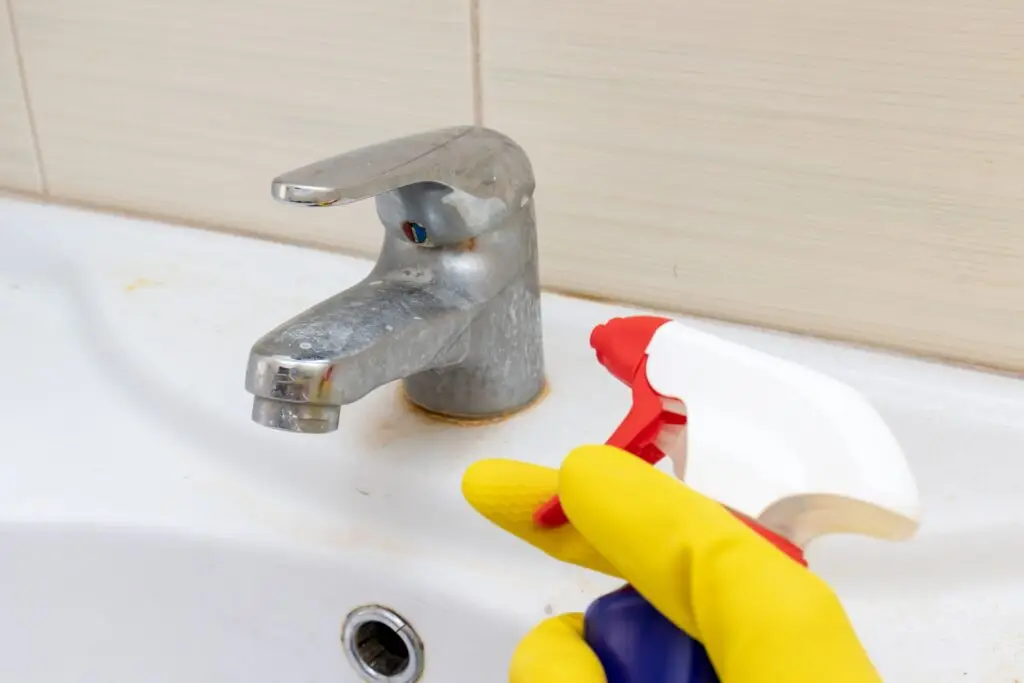
That dull, chalky white residue on your bathroom and kitchen faucets is more than just an eyesore—it’s a buildup of mineral deposits like calcium and magnesium, commonly known as “hard water.” While these minerals are harmless to your health, they can permanently etch your fixtures if left untreated. At Fabro Cleaning, we’ve mastered the art of restoring that showroom shine using simple, home-safe techniques.
Quick Answer: Best Way to Remove Faucet Water Stains
For most finishes, white vinegar is the gold standard. Simply soak a microfiber cloth in vinegar, wrap it around the affected area, let it sit for 15–30 minutes to break down the minerals, and then scrub gently with a soft toothbrush before rinsing and buffing the surface dry.
What Causes Hard Water Stains?
Hard water contains a high concentration of dissolved minerals. When water evaporates from your faucet surface, it leaves those minerals behind. Over time, these accumulate into a crusty, white layer that becomes increasingly difficult to remove with standard soap and water.
The Fabro Cleaning Toolkit
- White Vinegar: The mild acid dissolves the mineral bond.
- Lemon Juice: A great, fresh-smelling alternative to vinegar.
- Soft Toothbrush: Perfect for getting into the tight crevices where buildup hides.
- Microfiber Cloth: Essential for buffing without scratching.
- Plastic Bag: Used to hold the vinegar in contact with stubborn aerators.
Step-by-Step Removal Guide
- The “Vinegar Soak”: For heavy buildup on the faucet head or aerator, fill a small plastic bag with white vinegar. Secure the bag around the faucet with a rubber band so the mineral-covered parts are fully submerged. Let it sit for 30 minutes.
- Targeted Scrubbing: For the faucet body or base, soak a microfiber cloth in vinegar and wrap it around the area. Let it dwell for 15 minutes.
- Detail Work: Once the minerals have softened, use your soft toothbrush to gently scrub the edges and the seam where the faucet meets the sink.
- Rinse Thoroughly: Acidic solutions left on metal can eventually dull the finish. Rinse the area well with plain water.
- The Final Polish: This is the secret step: dry and buff. Use a clean, dry microfiber cloth to buff the fixture until it shines. Removing all water droplets immediately prevents new spots from forming.
A Note on Finishes: Chrome, Nickel, and Stainless Steel
- Chrome: Very durable; vinegar is perfect here.
- Brushed Nickel/Matte Finishes: These are more delicate. Do not leave acidic cleaners on for more than 15 minutes, as they can “pit” or discolor sensitive finishes.
- Oil-Rubbed Bronze: Avoid acids entirely if possible; use only mild soap and water, or follow the manufacturer’s specific cleaning guidelines to avoid stripping the protective coating.
What Not to Use
- Steel Wool or Abrasive Pads: These will permanently scratch the finish and create “grooves” where minerals will build up even faster in the future.
- Bleach: Bleach does not remove mineral deposits and can cause corrosion on certain metal alloys.
- Harsh Industrial Cleaners: Many heavy-duty bathroom cleaners contain abrasives that are too aggressive for polished fixtures.
How to Prevent Spots
The best way to fight hard water is to stop the water from drying on the fixture. Keep a microfiber cloth under your sink and give your faucets a quick “wipe dry” after every use. It takes five seconds but saves you hours of scrubbing later.
When to Call Fabro Cleaning
If you have stubborn, long-term buildup that won’t budge, or if you simply don’t have the time to maintain your fixtures, let us handle it. Our deep-cleaning services include meticulous attention to detail, ensuring your kitchen and bathroom hardware looks brand new.
FAQ
What removes hard water stains from faucets?
White vinegar is the most effective and safest household solution for dissolving calcium and magnesium buildup.
Can vinegar damage faucet finishes?
If left on for too long—especially on sensitive finishes like nickel or bronze—it can cause discoloration. Always rinse thoroughly after use.
How do you remove white buildup around faucets?
Soak the area in vinegar using a cloth wrap for 15–30 minutes, then scrub away the loosened minerals with a soft toothbrush.
Does lemon juice remove water stains?
Yes, the citric acid in lemon juice works similarly to acetic acid in vinegar, though it is slightly less potent and leaves a pleasant scent.
How do you keep faucets shiny longer?
The secret is keeping them dry. Wipe your faucets down after use to prevent the water from evaporating and leaving behind mineral crust.
Tired of scrubbing your sink fixtures? At Fabro Cleaning, we pride ourselves on those small details that make your home shine. Click here to get your free estimate from Fabro Cleaning and let us handle the sparkle for you!