
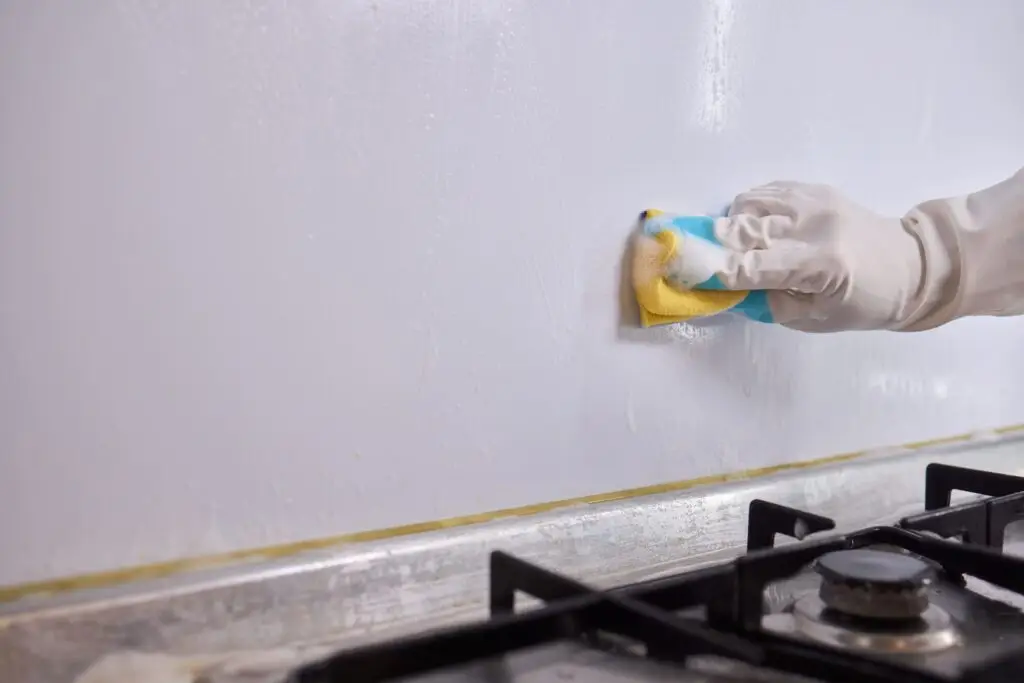
Kitchen grease is more than just a mess; it is a microscopic layer of airborne fat that settles on every surface near your stovetop. Over time, this thin film attracts dust, turning your walls from clean to sticky, dull, and dark. At Fabro Cleaning, we understand that removing this buildup requires a careful balance: you need enough cleaning power to break the fat molecules, but not so much that you damage your paint or finish.
Quick Answer: Best Way to Clean Greasy Kitchen Walls
For most painted walls, the safest and most effective method is to use a mixture of warm water and a high-quality grease-cutting dish soap. Apply the solution with a soft microfiber cloth, work in small sections to prevent over-wetting, and wipe dry immediately. For stubborn, “baked-on” grease, a light baking soda paste is your best ally.
Why Grease Builds Up
When you sauté, fry, or boil, fat and oil molecules become airborne in the form of steam. As these molecules travel away from the heat source, they eventually cool down and land on the nearest vertical surface—your walls and backsplash. If not wiped away promptly, this oil oxidizes and becomes sticky, trapping dust and dirt in the process.
The Fabro Cleaning Toolkit
- High-Quality Dish Soap: Look for brands known for grease-cutting power (like Dawn).
- Microfiber Cloths: Their fine fibers provide the “grip” needed to lift grease without aggressive scrubbing.
- Baking Soda: A mild abrasive that provides mechanical help for thick grease.
- Non-Abrasive Sponge: Use the soft side only to avoid “burnishing” (shiny spots) on your paint.
- Vinegar (Optional): Use only as a last resort for heavy mineral-oil buildup; avoid it on some delicate paints.
Step-by-Step: Removing Grease Safely
1. The Dish Soap Method (Best for Painted Walls)
- Prep: Mix 1–2 teaspoons of grease-cutting dish soap into a quart of warm water.
- Test: Always test in a discreet area (behind a door or appliance) to ensure the paint doesn’t rub off.
- Wipe: Dip your microfiber cloth into the solution and wring it out until it is barely damp.
- Agitate: Use light, circular motions. Do not scrub hard, as excessive friction can wear away the pigment of matte or eggshell paints.
- Rinse and Dry: Follow immediately with a cloth dampened only with clean water, then finish by patting the wall dry with a clean towel.
2. The Baking Soda Paste (For Old, Sticky Grease)
If you have grease that has been sitting for months, the soap-and-water method might not be enough.
- Mix: Create a paste using 3 parts baking soda and 1 part warm water.
- Dwell: Gently spread the paste over the sticky area. Let it sit for 3–5 minutes. This allows the baking soda to absorb the oil.
- Lift: Gently wipe the paste away. The grease should come off with the paste.
- Clean Up: Wipe away any powdery residue with a damp cloth and dry immediately.
Cleaning Tile Backsplashes
Tile is much more durable than paint. If you have a ceramic or glass tile backsplash, you can be slightly more aggressive. Use a stronger vinegar-and-water solution or a commercial degreaser. Because tile is non-porous, you don’t need to worry about water damage, but be sure to clean the grout lines, where grease likes to hide. An old, soft-bristled toothbrush is perfect for these tight spaces.
What Not to Use
- Harsh Abrasives: Green scouring pads will permanently dull your paint and scratch tile glazes.
- Too Much Water: Never soak a painted wall. Paint is a film; if water seeps behind it or softens it too much, it can cause the paint to bubble or peel.
- Unverified Chemicals: Avoid heavy-duty oven cleaners or paint thinners on your walls; they will strip your paint finish instantly.
How to Prevent Future Buildup
- The “Post-Cook” Wipe: Get into the habit of a 30-second wipe-down of your backsplash every evening after cooking. It prevents the grease from ever having the chance to oxidize and harden.
- Use Your Exhaust Fan: Always run your kitchen exhaust fan before you start cooking, and let it run for 10 minutes after you finish. This draws the oil vapor out of the room before it can land on your walls.
FAQ
What cuts grease on kitchen walls?
High-quality grease-cutting dish soap is the most effective and safest way to break down culinary fat on painted walls.
Can vinegar remove grease from walls?
Yes, vinegar is an acid that can break down oil, but it should be used with caution on painted surfaces as it can dull the finish over time.
How do you clean grease without removing paint?
Use the “damp, not wet” rule. Keep the cloth lightly damp, use a high-quality dish soap solution, and never scrub—let the soap do the work of breaking the chemical bond of the grease.
Can baking soda damage painted walls?
If mixed into a paste with water, it is very safe. Avoid using it “dry” or as a powder, which could be too abrasive.
How often should kitchen walls be cleaned?
Perform a light wipe-down in high-traffic areas weekly. A deeper cleaning of the entire wall area above the stovetop should happen once a month.
Need your kitchen deep-cleaned by the pros? At Fabro Cleaning, we have the tools and the expertise to restore your kitchen’s shine, removing stubborn grease without damaging your surfaces. Click here to get a free estimate from Fabro Cleaning and let our experts refresh your home today!