
Luxury Vinyl Plank (LVP) flooring is celebrated for its durability and wood-like aesthetic, but it isn’t indestructible. Because LVP features a specialized “wear layer” that protects the design, using the wrong cleaner can strip that finish, leaving your floors dull, sticky, or prone to scratching.
At Fabro Cleaning, we have mastered the balance between effective dirt removal and surface protection. Here is how to keep your LVP floors in showroom condition.
What Makes LVP Floors Different?
Unlike natural hardwood, LVP is a synthetic product made of layers of PVC. While it is highly water-resistant, the seams between planks are a potential point of failure. If water or harsh chemicals seep into these seams, they can cause the planks to swell, warp, or separate over time. This is why “less is more” when it comes to moisture and chemical strength.
Quick Answer: Best Cleaner for LVP Floors
The gold standard for LVP flooring is a pH-neutral cleaner. Products like Bona Hard-Surface Floor Cleaner are industry favorites because they are specifically formulated to clean without leaving behind a residue that attracts future dust. If you prefer a DIY route, a simple solution of warm water and a few drops of mild dish soap (like Dawn) is highly effective and perfectly safe.
Best Store-Bought Cleaners for Vinyl Plank Flooring
When shopping for LVP-specific products, always check the label for “pH-neutral.”
- Bona Hard-Surface Floor Cleaner: The top choice for most professionals. It dries quickly, leaves no streaks, and is gentle on the protective wear layer.
- Rejuvenate Luxury Vinyl Floor Cleaner: Specifically engineered for vinyl. It’s excellent for lifting dirt in high-traffic areas without damaging the floor’s finish.
- Zep Neutral pH Floor Cleaner: A fantastic budget-friendly option, especially for large areas. It requires dilution, making one bottle last for many cleaning sessions.
Best Homemade Cleaning Solution for LVP
If you prefer a natural approach, you can easily mix your own.
- The Recipe: Mix 1 gallon of warm water with 1 tablespoon of mild dish soap.
- Why it works: Dish soap is designed to cut through grease, making it perfect for kitchen LVP, while the pH-neutral balance ensures no damage to the wear layer.
- Vinegar Note: You will often see “vinegar and water” recommended online. While it can work, the acidity in vinegar can dull the finish of some LVP products over time. Use it sparingly (no more than once a month) or avoid it if your manufacturer’s care guide specifically warns against it.
How to Clean LVP Floors Step by Step
- Dry Dust or Vacuum First: This is the most critical step. Use a vacuum without a beater bar (or set it to “hard floor” mode). Grit and sand act like sandpaper; if you mop before you sweep, you will drag those particles across the floor and create micro-scratches.
- Damp Mop: Dip your microfiber mop into your solution and wring it until it is barely damp. Never “flood mop” your floors.
- Clean in Sections: Work in small areas, moving with the grain of the planks.
- Dry Immediately: After mopping, use a clean, dry microfiber cloth to buff the area dry. Preventing water from sitting on the seams is the key to longevity.
What Not to Use on Vinyl Plank Flooring
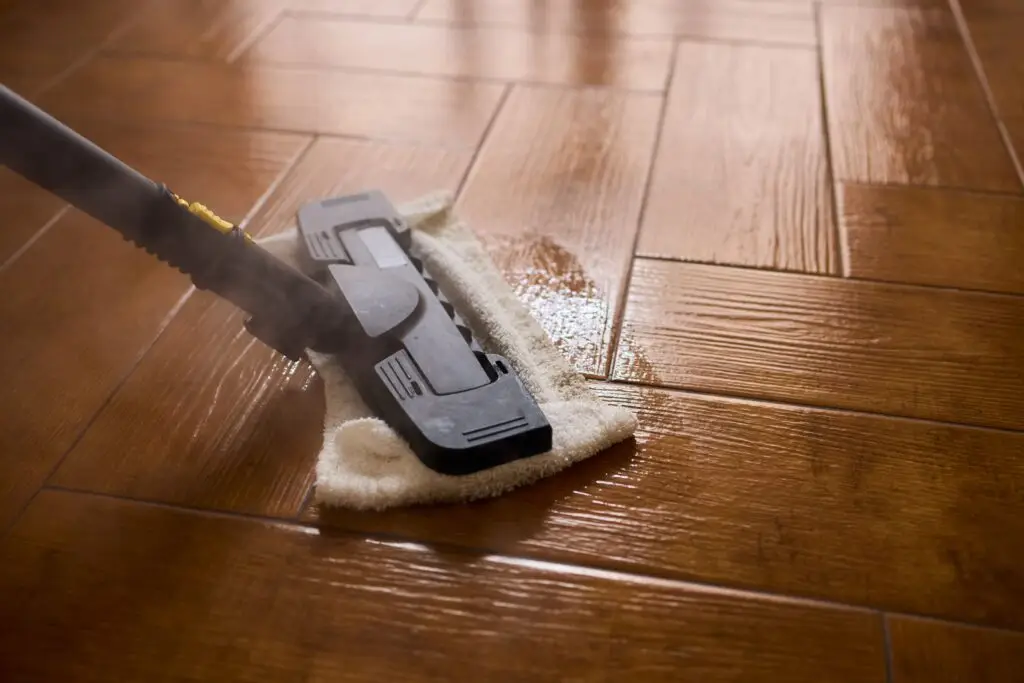
- Steam Mops: High heat can soften the adhesive and cause planks to warp.
- Abrasive Scrubbers: Never use steel wool or harsh scouring pads.
- Wax or Polish: These create a sticky buildup that traps dirt and actually makes the floor look duller over time.
- Bleach or Ammonia: These are too corrosive and will permanently discolor the vinyl.
FAQ
What is the best thing to mop vinyl plank floors with?
A microfiber mop. Its flat surface covers more ground and the fabric is designed to pick up fine dust that string mops simply push around.
Can Swiffer be used on luxury vinyl plank?
Yes, both dry and wet Swiffer pads are safe, provided you aren’t leaving the floor soaking wet. However, ensure the wet pads don’t contain wax or “shine-enhancing” agents.
Does vinegar damage vinyl plank flooring?
It can. While many homeowners use it, the acidity of vinegar can eventually break down the protective wear layer of your floors, leading to a cloudy appearance.
How do you make LVP floors shine?
Regular, proper cleaning is the only “shine” LVP needs. If your floors are dull, it is likely due to soap residue buildup from using too much cleaner. A rinse with plain water can often “reset” the floor.
Why does my vinyl floor look dull after mopping?
Usually, this is caused by “over-soaping.” If you use too much soap, it leaves a microscopic film on the floor that attracts dirt. Rinse your floors with plain, warm water and buff them dry to restore the original luster.
Is your home’s flooring looking less than pristine? At Fabro Cleaning, we treat every floor with the specialized care it deserves. Don’t spend your weekend scrubbing—let our professional team provide the deep, streak-free clean your home needs.
Contact Fabro Cleaning today for a professional service estimate!