
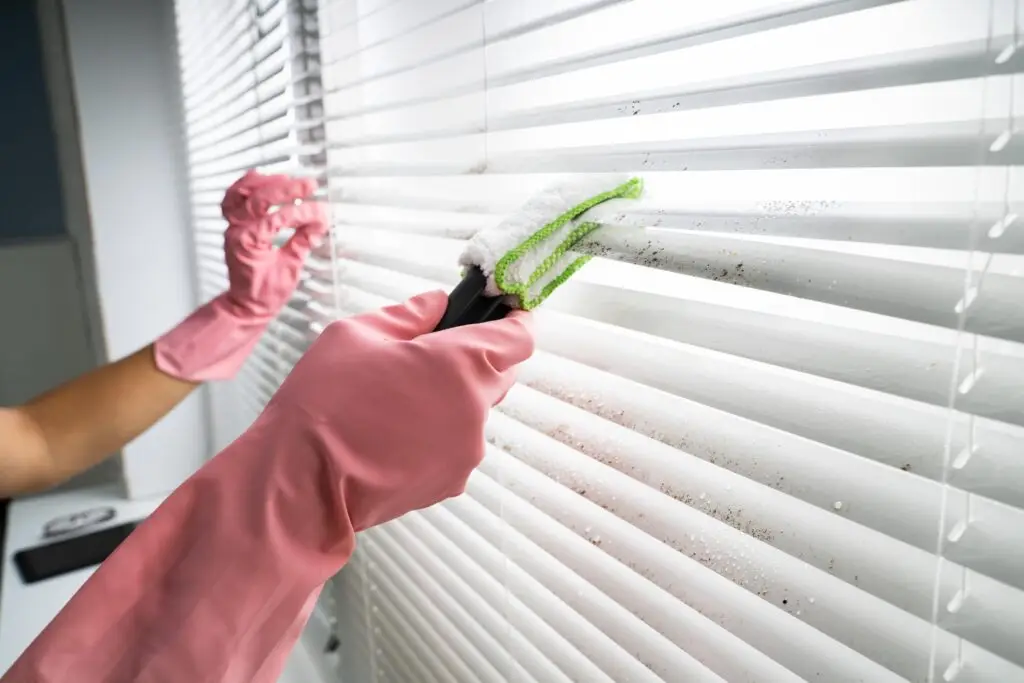
Window blinds are often the “dust magnets” of the home. Because they sit right in the path of airflow from windows and vents, they accumulate layers of dust, pollen, and even household grease that can dull their appearance and trigger allergies. At Fabro Cleaning, we treat blinds with the same care as your delicate home textiles, knowing that the wrong cleaning method can cause warping, fading, or mechanical failure.
Quick Answer: The Fastest Way to Clean Blinds
The quickest way to clean blinds without taking them down is to use a vacuum with a soft brush attachment. With the blinds closed, run the brush vertically from top to bottom, then flip the slats and repeat on the other side. Follow up with a microfiber cloth or a dedicated “blind cleaning tool” to catch any remaining fine dust.
Why Blinds Collect Dust
Blinds are essentially a series of horizontal or vertical shelves. Every slat provides a surface for airborne dust particles to settle. In kitchens, this dust mixes with cooking oils to form a sticky film; in bathrooms, humidity can turn that dust into a stubborn, grime-like layer that clings to the material.
Essential Tools for Blind Maintenance
- Microfiber Cloth: The best tool for trapping dust rather than just blowing it around.
- Vacuum Brush Attachment: Use only a soft-bristle brush to avoid scratching the surface.
- Blind Cleaning Tool: These hand-held devices feature multiple sleeves that allow you to clean the top and bottom of multiple slats simultaneously.
- Mild Soap Solution: A few drops of grease-cutting dish soap in a bucket of warm water is the safest cleaner for almost all non-porous blinds.
- Dryer Sheet: A pro-tip for preventing future buildup—lightly wiping your blinds with a dryer sheet helps create an anti-static barrier that repels dust.
Cleaning Without Removing Them
For regular maintenance, you don’t need to struggle with hardware:
- Close the blinds until the slats are flat.
- Dust one side using your tool or cloth, working from the top down.
- Flip the slats to the opposite position and repeat the process on the other side.
- Finish the frame and headrail, as these areas collect just as much dust as the slats themselves.
Deep Cleaning Very Dirty Blinds
If your blinds have a sticky, greasy film, dusting won’t be enough.
- For Metal or Vinyl: Remove the blinds from the window and lay them in a bathtub filled with warm, soapy water. Let them soak for 20–30 minutes to break down grease, rinse them with a handheld showerhead, and hang them outside or over the tub to air dry completely before re-installing.
- For Wood or Faux Wood: Never submerge these in water. Use a damp microfiber cloth with a very small amount of mild soap, followed immediately by a dry towel to prevent warping.
Care by Material
- Vinyl/Aluminum: These are the most durable. They handle water well and can be deep-cleaned in a bathtub or sink.
- Real Wood: Water is the enemy. Use wood-safe polish and avoid moisture. Too much water will cause the slats to bow and warp.
- Faux Wood: These mimic real wood but are moisture-resistant. A damp cloth with mild soap is perfectly fine, but avoid harsh abrasive scrubbers.
- Fabric/Cellular Shades: Avoid scrubbing. Use a vacuum brush attachment or a hairdryer on a cool setting to “blow” the dust out of the cells. For stains, blot—never rub.
Common Cleaning Mistakes
- Using Abrasive Sponges: Green scouring pads will ruin the finish on vinyl and faux wood blinds.
- Over-Saturating Wood: Moisture is the primary cause of wood blind failure.
- Ignoring the Headrail: The headrail contains the mechanical gears and cords. If dust gets into the mechanism, your blinds will become stiff and eventually stop working.
- Applying Polish Directly to Slats: Always spray your cleaner onto your cloth first, then wipe. Spraying the blinds directly can cause uneven spotting or moisture buildup in the cord holes.
Recommended Cleaning Schedule
- Dusting: Every 1–2 weeks to keep the mechanism and surface clear.
- Deep Clean: Once or twice a year, depending on the room (kitchen blinds may need more frequent attention).
- Allergy Sufferers: Increase dusting to weekly to ensure your bedroom remains an allergen-free zone.
FAQ
What is the easiest way to clean blinds?
Regular dusting with a microfiber cloth or a vacuum brush attachment is the easiest way to keep them clean and avoid the need for deep washing.
Can you clean blinds without removing them?
Yes. For most weekly maintenance, dusting while they are hanging is perfectly effective. Only remove them if they have heavy grease buildup that requires a bathtub soak.
How do you clean dusty fabric blinds?
Use a vacuum with a brush attachment on low suction. For deep cleaning fabric, use a cool-setting hairdryer to blow dust out of the cells or fabric folds.
What is the best duster for blinds?
A multi-sleeve blind cleaning tool is the best for horizontal slats, while a microfiber duster is best for vertical blinds.
How often should window blinds be cleaned?
Dust them every 1–2 weeks to prevent buildup, and perform a deep clean every 6 months to maintain their function and appearance.
Tired of cleaning? Let Fabro Cleaning handle the chores! Keeping your home spotless is a full-time job—we’re here to help. Click here to get a free estimate from Fabro Cleaning and let our professionals take care of your home maintenance today!