
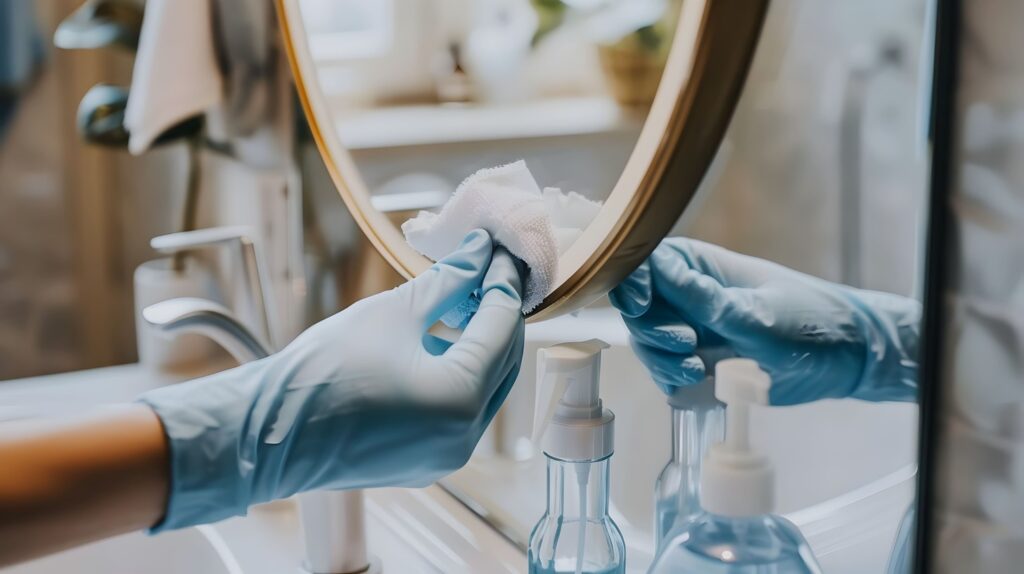
When it comes to maintaining a pristine home, few things are as satisfying—or as frustrating—as cleaning a mirror. While mirrors and windows are both made of glass, the silvering on the back of a mirror makes it a unique surface that requires a specific approach to avoid permanent damage or unsightly streaks.
Quick Answer: Yes — But Technique Matters
The short answer is yes: you can absolutely use standard glass cleaner on mirrors. However, the common method of “spraying and wiping” that people use on windows is often the very reason mirrors look cloudy or develop black spots over time. To get a crystal-clear reflection, you must prioritize the application method over the product itself.
Why Mirrors Get Streaky
Even with high-quality cleaners, streaks can plague your reflection. This usually happens due to three main factors:
- Over-spraying: Drenching the mirror in liquid allows the cleaner to seep behind the glass. This can cause “black edge” or desilvering, where the chemicals eat away at the reflective backing.
- Paper Towel Lint: Many people reach for paper towels, but most consumer brands shed tiny fibers. These fibers catch on the glass, creating a hazy, dusty appearance immediately after cleaning.
- Hard Water Residue: If you are diluting your cleaner with tap water—especially in areas with high mineral content—the minerals stay behind on the glass once the liquid evaporates, creating white streaks.
Best Way to Clean Mirrors
To achieve a professional, streak-free finish, follow these industry-standard steps:
Spray Cloth, Not Mirror
Never spray the cleaning solution directly onto the mirror. Instead, mist your cleaning cloth. This prevents the liquid from pooling at the bottom of the frame or seeping into the edges, which is the leading cause of mirror “rot.”
Use Microfiber Cloth
The gold standard for mirrors is a flat-weave microfiber cloth. Unlike terry cloth towels or paper products, microfiber is designed to grab dirt and oils without leaving lint behind. Use one cloth for the damp wipe and a second, dry microfiber cloth for the final buffing.
Wipe in a Consistent Pattern
Avoid circular motions, which simply move dirt around. Instead, use an “S” pattern, starting from the top left corner and moving across to the right, then snaking back down. This ensures every inch of the surface is covered and helps prevent streaks from forming in different directions.
Vinegar vs. Commercial Glass Cleaner
Choosing between a store-bought blue spray and a DIY solution depends on your preferences and the type of mirror you own.
Pros and Cons
- Commercial Cleaners: These usually contain surfactants that help lift grease (like fingerprints or hairspray) and alcohols that help the product evaporate quickly.
- Vinegar (50/50 mix with water): This is an eco-friendly, non-toxic alternative that is excellent at cutting through hard water spots and soap scum. It is much cheaper than commercial brands but lacks the quick-drying agents found in specialized sprays.
When to Avoid Vinegar (Antique Mirrors)
If you are cleaning an antique mirror or one with a delicate gilded frame, be very cautious with vinegar. The acid in vinegar can be too harsh for old glass or sensitive finishes. In these cases, it is safest to use a slightly dampened microfiber cloth with plain distilled water.
FAQs
Why are my mirrors cloudy?
Cloudiness is usually a buildup of “residue” from previous cleaning attempts or a film of hairspray and bathroom products. To fix this, you may need to do a “pre-clean” with a bit of rubbing alcohol on a cotton pad to remove the oily film before doing a standard cleaning.
Is newspaper good for cleaning mirrors?
While this was a popular “hack” decades ago, modern newspapers use different inks and paper stock than they used to. Today, using newspaper often leaves gray ink residue on your hands and the mirror frame, and it can be quite abrasive. Stick to microfiber for better results.
How often should mirrors be cleaned?
In high-traffic areas like bathrooms, mirrors should be wiped down weekly to prevent toothpaste and hairspray from hardening. Decorative mirrors in hallways or bedrooms typically only need a deep clean once a month, with light dusting in between.
Bring the Sparkle Back to Your Home
Achieving a streak-free home shouldn’t be a chore. If you’d rather spend your time enjoying your reflection than cleaning it, let the professionals handle the heavy lifting. At Fabro Cleaning, our experts use specialized tools and techniques to ensure every glass surface in your home is flawless.
Click Here to Schedule a Professional Deep Clean and See the Difference Today!