
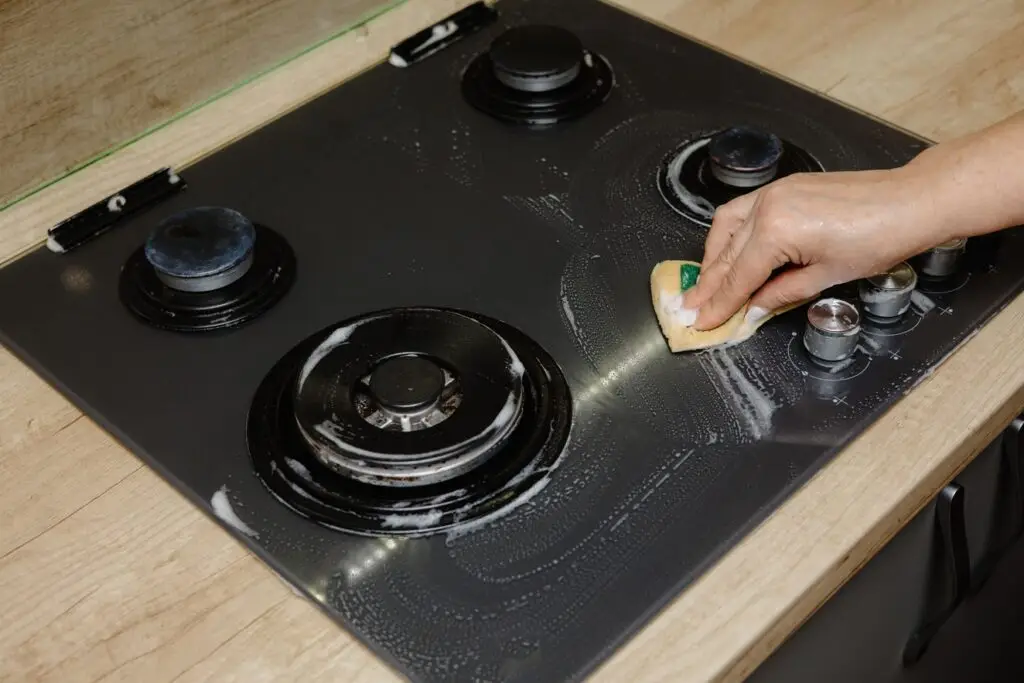
When faced with stubborn, carbonized food spills and grease rings on your kitchen range, it might seem logical to reach for a heavy-duty oven cleaner. After all, if it can melt away years of baked-on grime inside the oven, it should make quick work of a messy cooktop, right?
However, the reality is much more complicated. Using the wrong chemicals on your stove can lead to permanent structural and aesthetic damage.
Quick Answer: Usually No — It Can Damage the Surface
The short answer is no, you should generally avoid using traditional oven cleaners on your stove top. Most oven cleaners, particularly the “heavy-duty” varieties found in U.S. supermarkets, are formulated with highly caustic ingredients designed for porcelain-coated steel and heavy metal racks.
Stove tops, whether they are modern glass-ceramic, classic electric coils, or sleek stainless steel, are far more delicate than the interior of an oven. Applying these chemicals can lead to etching, pitting, and irreversible cloudiness.
Why Oven Cleaner Can Be Too Harsh
Standard oven cleaners (like the classic Easy-Off Heavy Duty) are powerful because they utilize high pH levels to break down organic matter. Here is why that power is a liability for your cooktop:
Strong Chemicals
Most oven cleaners contain Sodium Hydroxide (Lye) or Potassium Hydroxide. These are highly corrosive bases. While the thick porcelain lining inside an oven can withstand these chemicals for short periods, the materials used on the exterior of the appliance are often different. These chemicals are designed to eat through carbon, but they don’t know the difference between “burnt-on lasagna” and the “finish of your stove.”
Surface Discoloration Risk
- For Glass/Ceramic: The chemicals can strip the protective coating or the decorative markings (the rings indicating burner size). It can also cause “iridescence,” an oily-looking discoloration that cannot be wiped away.
- For Aluminum: Many stove components (like burner caps or trim) are made of aluminum. Oven cleaner reacts chemically with aluminum, causing it to turn black or dark gray instantly.
- For Stainless Steel: Prolonged exposure can lead to “white rust” or dark spotting, stripping the chromium oxide layer that makes the steel “stainless” in the first place.
Best Way to Clean Stove Tops
To maintain your appliance’s warranty and its visual appeal, use methods tailored to the specific material of your stove.
Glass Stove Tops
Glass-ceramic cooktops are the most common in modern American kitchens but are the most prone to scratching.
- The Scraping Method: While the surface is cool, use a specialized razor scraper held at a 45-degree angle to lift large burnt-on deposits.
- Cream Cleaners: Use a dedicated product like Cerama Bryte or Weiman Glass Cooktop Cleaner. These contain mild abrasives that polish without scratching.
- The Towel Trick: For heavy grease, spray the top with white vinegar, sprinkle baking soda, and lay a hot, damp towel over it for 15 minutes before wiping.
Electric Coil Stove Tops
These classic American ranges feature removable parts that require different levels of care.
- The Coils: These are actually self-cleaning. If food spills on them, simply turn the heat to high for 2-3 minutes to burn the residue to ash. Never submerge coils in water.
- Drip Pans: These can often be cleaned with oven cleaner if they are chrome, but it is safer to soak them in a mixture of blue Dawn dish soap and baking soda. If they are beyond saving, drip pans are inexpensive to replace at most hardware stores.
Stainless Steel Surfaces
Stainless steel requires a “less is more” approach to maintain its luster.
- Direction Matters: Always wipe in the direction of the “grain” of the steel.
- The Solution: A simple 50/50 mix of water and white vinegar is excellent for removing streaks. For heavy grease, a specialized stainless steel spray or a drop of dish soap on a microfiber cloth works best.
FAQs
What removes burnt stains from glass cooktops?
The most effective method for “impossible” white rings or black carbonized stains is a combination of a specialized glass cooktop cream and a razor scraper. For a natural route, a paste of baking soda and a small amount of water left to sit for 30 minutes will soften the bond of the stain.
Is baking soda safe?
Yes. Baking soda is a “mild base” with a low Mohs hardness scale rating, meaning it is softer than glass and most metal finishes. It provides just enough mechanical friction to lift stains without the corrosive risks of lye-based cleaners.
How often should stove tops be cleaned?
Ideally, you should do a “daily wipe” after the stove has cooled to prevent spills from being baked on during the next cooking session. A deep clean with specialized polish should be performed once a week for active kitchens to maintain the surface’s protective barrier.
Keep Your Kitchen Shining Like New
Don’t risk ruining your expensive appliances with harsh chemicals. If your stove top has reached a point where DIY methods aren’t enough, it’s time for a professional touch.
Book a Professional Deep Kitchen Clean Today and Save Your Surfaces!