
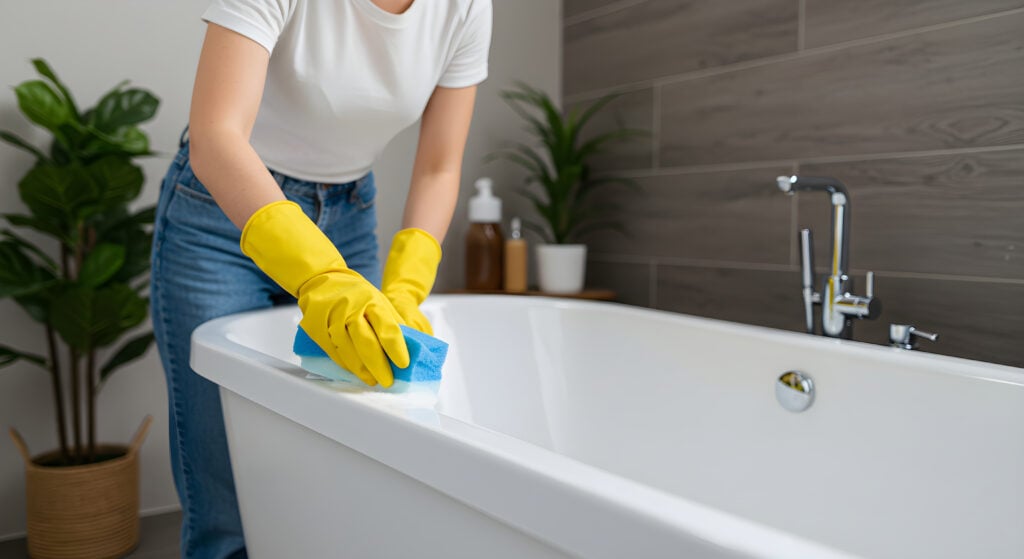
If you are standing in your bathroom with a bottle of toilet bowl cleaner in one hand and a sponge in the other, stop. While it might seem like a “heavy-duty” solution for a dirty tub, using toilet bowl cleaner on a bathtub is a dangerous mistake that can ruin the surface of your tub permanently.
Toilet bowl cleaners are formulated with high concentrations of hydrochloric acid or strong bleach to combat the specific buildup found in toilets. Bathtubs, which are made of much more delicate materials, cannot withstand these harsh chemicals.
Why Toilet Bowl Cleaner Is Not Safe for Most Tubs
Porcelain, acrylic, fiberglass, enamel, and stone concerns
Bathtubs are constructed from materials that have a factory-applied finish or a porous structure.
- Acrylic and Fiberglass: These are plastics. Strong acids will cause them to lose their protective sheen immediately.
- Porcelain and Enamel: These are glass-like coatings. Acidic cleaners can break down the bond of these coatings, leading to rough, porous surfaces that trap dirt even faster.
- Natural Stone: Acid will instantly etch stone, leaving permanent dull spots or “burns” that require professional refinishing to fix.
Why acidic cleaners can damage finishes
The acidic nature of these products works by chemically “eating” through mineral deposits. If you use them on a tub, they don’t distinguish between the mineral buildup you want to remove and the surface finish you want to keep. The chemical reaction strips the protective glaze, leaving your tub permanently prone to staining.
What Happens If Toilet Cleaner Sits on a Tub?
- Discoloration: The dyes in many toilet cleaners can sink into the microscopic pores of the tub, leaving blue, green, or yellow stains that are nearly impossible to remove.
- Etching: You may see a “matte” finish appear where the cleaner touched the tub. This is the chemical burn of the surface finish.
- Surface dullness: The mirror-like reflection of a new tub is replaced by a chalky, rough texture that feels “squeaky” but is actually damaged.
- Damage around drains and fixtures: Toilet cleaner can drip behind the drain cover or faucet trim, corroding the metal and weakening the seals that keep your tub waterproof.
Safer Alternatives for Cleaning a Tub
- Tub-safe bathroom cleaners: Look for products specifically labeled “safe for acrylic” or “safe for fiberglass.”
- Dish soap and warm water: For daily maintenance, a few drops of grease-cutting dish soap and a soft cloth are the best ways to keep the finish intact.
- Baking soda paste: For a mild, natural scrub, mix baking soda with water to form a paste. It is effective on grime but won’t scratch the tub surface.
- Product options for soap scum: Use dedicated shower and tub cleaners that utilize citrus-based enzymes or mild surfactants rather than industrial-strength acids.
How to Clean a Bathtub Without Damaging It
- Identify the tub material: If you aren’t sure what your tub is made of, treat it as “delicate” by default.
- Test cleaner in a small area: Always test any new cleaning product in a hidden spot (like the back corner near the drain) and wait 24 hours to see if there is any reaction.
- Use non-scratch tools: Never use steel wool or green scouring pads. Use microfiber cloths or non-scratch sponges designed for kitchen non-stick pans.
How Routine Cleaning Prevents Harsh Chemical Use
- Weekly bathroom cleaning: Wiping down the tub weekly prevents soap scum from hardening, meaning you never need “heavy-duty” chemicals to get it clean.
- Monthly deep cleaning: A consistent monthly scrub keeps mineral buildup under control, ensuring your tub remains hygienic without the need for aggressive acid.
FAQ
Can toilet cleaner damage an acrylic tub?
Yes. It can cause irreversible dulling, discoloration, and structural stress cracks in acrylic and fiberglass.
What is the best cleaner for bathtub stains?
A gentle, pH-neutral bathroom cleaner or a homemade baking soda paste is the safest and most effective choice for almost all tub materials.
How do you remove soap scum safely?
Warm water, dish soap, and a microfiber cloth are usually sufficient. If scum is stubborn, use a dedicated soap scum remover that is specifically labeled as “non-acidic.”
Can vinegar be used on a bathtub?
While gentler than toilet cleaner, vinegar is still acidic. Use it sparingly on porcelain, and avoid using it on natural stone (like marble or granite) as it will etch the surface.
What should I do if toilet cleaner stained my tub?
Rinse the area thoroughly with water for several minutes. Do not scrub it with more chemicals. If the finish is already dulled or discolored, you may need to call a professional cleaning service or surface restoration expert.
Professional Cleaning Care for Your Home
Maintaining a clean and sparkling bathtub doesn’t have to involve risky chemicals. At Fabro Cleaning Services, we use professional-grade, material-safe supplies that ensure your bathroom surfaces stay protected, shiny, and sanitary.
Don’t gamble with your home’s finish. Let our team handle the deep cleaning so you can enjoy a spotless home without the stress or the risk of damage.
Book Your Professional Deep Cleaning Today! | Request a Free Quote