
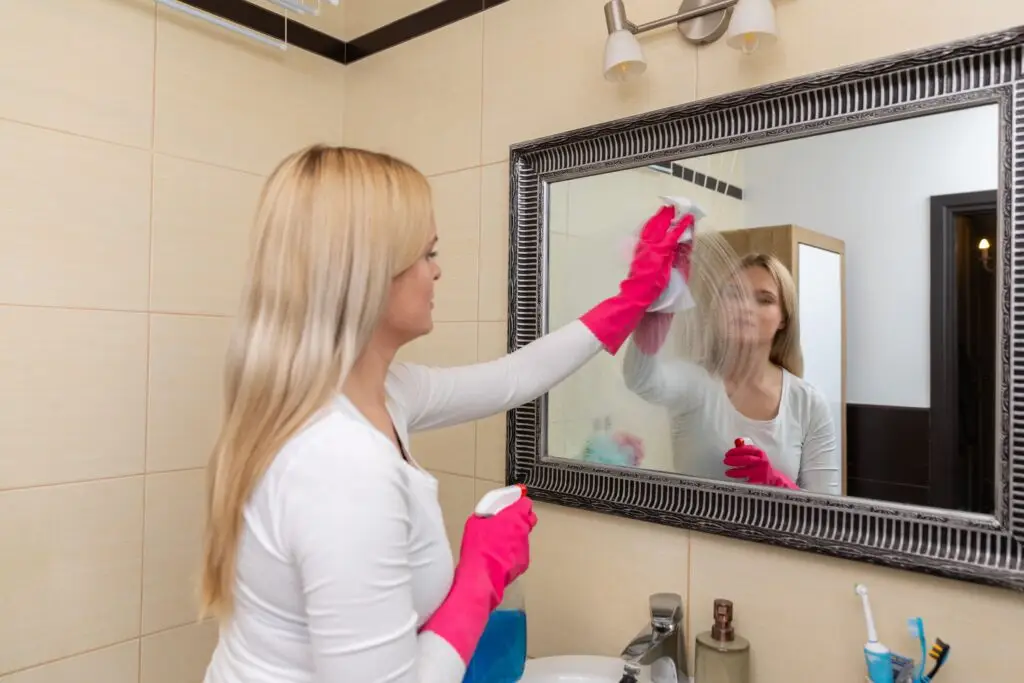
There is nothing quite as frustrating as finishing a thorough bathroom clean, stepping back, and realizing your mirror is covered in a cloudy, streaky haze. Bathroom mirrors endure a daily onslaught of steam, splashing water, toothpaste splatter, and aerosolized grooming products.
Because of this constant exposure, standard wiping techniques often just smear these oils and minerals around rather than removing them.
At Fabro Cleaning, our professional sanitization methods are built around science and precision. In this guide, we’ll reveal the exact steps, tools, and chemistry required to achieve a flawless, crystal-clear, streak-free bathroom mirror every single time.
Why Bathroom Mirrors Get Streaky
To achieve an invisible finish, you must first understand the elements clinging to your glass.
Steam, toothpaste, fingerprints, and product residue
Bathroom mirrors face a highly complex “soil load” compared to standard household windows:
- Hairspray and Aerosols: Modern hairsprays and deodorants contain polymers and silicones designed to stick. When sprayed, these particles drift through the air and settle on the glass, forming a stubborn, sticky film.
- Toothpaste and Splatters: Toothpaste contains binders and mild abrasives (like silica) that dry into hard, alkaline spots on the glass.
- Steam and Hard Water: Every hot shower releases steam. In Pennsylvania, many homes—especially those relying on well water—deal with moderate to high hard water levels. When steam condenses and dries on the mirror, it leaves behind microscopic calcium and magnesium mineral deposits.
Why paper towels often leave lint
Many homeowners reach for a paper towel and a blue spray bottle as their default glass-cleaning kit. However, paper towels are made of wood pulp. When rubbed against the high-friction surface of glass, they shred at a microscopic level, leaving behind thousands of tiny white lint particles.
Furthermore, many paper towels are treated with binding agents and chemical softeners that can transfer directly to your mirror, creating a cloudy film.
Best Supplies for Cleaning Bathroom Mirrors
Achieving a professional-grade result requires moving away from generic grocery store tools. Here is the ultimate specialist toolkit:
THE MIRROR CLEANING TOOLKIT
[THE CLOTH] [THE LIQUID] [THE PRE-TREAT]
Flat-Weave Microfiber Distilled Water + Vinegar 70% Isopropyl Alcohol
(Zero lint, high friction) (Dissolves mineral film) (Melts hairspray oils)
Microfiber cloths (The flat-weave advantage)
Not all microfiber is created equal. For mirrors, you should avoid the fluffy, high-pile microfiber cloths used for general dusting. Instead, use a flat-weave (or waffle-weave) glass-cleaning microfiber cloth. These feature a tight, loop-free weave that maximizes surface contact and effortlessly cuts through residue without leaving lint behind.
Glass cleaner, vinegar solution, and isopropyl alcohol
- 70% Isopropyl (Rubbing) Alcohol: The absolute secret weapon of professional cleaners. Alcohol has an incredibly low boiling point, meaning it evaporates almost instantly, preventing water marks before they can form.
- Distilled White Vinegar and Distilled Water (50/50 Mix): Distilled water is completely free of minerals, while vinegar’s acetic acid breaks down the alkaline residues of soap, toothpaste, and hard water.
What not to use on mirrors
To preserve the structural integrity of your glass:
- Never use ammonia-based cleaners on framed or antique mirrors: Ammonia is highly corrosive and can seep behind the silver backing, causing permanent black spots (called desilvering).
- Avoid abrasive sponges or magic erasers: These can scratch the polished glass surface or strip away modern anti-fog coatings.
- Ditch the fabric softeners: When laundering your microfiber cloths, never use fabric softeners or dryer sheets. They leave an oily coating on the fibers that will smear across your mirror during your next clean.
Step-by-Step: Best Way to Clean a Bathroom Mirror
Follow this systematic, top-to-bottom sequence used by our elite teams to guarantee a flawless finish:
| Step | Action | Specialist Technique | Why It Matters |
| 1. Dust | Dry microfiber wipe | Gently dust the entire frame and glass surface first. | Prevents dust from turning into wet “mud” when sprayed. |
| 2. Pre-Treat | Rubbing alcohol spot-clean | Dab alcohol onto a cotton pad and rub away dried toothpaste and hairspray. | Dissolves heavy lipids and proteins before wet wiping. |
| 3. Mist | Spray the cloth, not the glass | Lightly mist your flat-weave cloth—do not soak it. | Keeps liquid from pooling in the frame and causing “black edge.” |
| 4. Wipe | Tight “S” or “Z” pattern | Move horizontally from top-left, looping down and sweeping back. | Avoids redepositing grime into the center of the mirror. |
| 5. Polish | Dry buffing pass | Use a second, bone-dry microfiber cloth to buff the edges and glass. | Removes any evaporating moisture to lock in the streak-free shine. |
How to Prevent Fog and Water Spots
Once your mirror is perfectly clear, you can implement preventative strategies to keep it that way longer.
Ventilation tips
The most effective anti-fog tool is your bathroom’s exhaust fan.
- Turn the fan on before you start your shower, not after the room is already steamy.
- Leave the fan running for at least 15 to 20 minutes after you exit the bathroom to drop the relative humidity below 50%. This prevents moisture from condensing on the cold mirror surface.
Bathroom humidity control
In Pennsylvania, seasonal shifts can cause high indoor humidity, especially during humid summer months. Running a dehumidifier or ensuring your HVAC system’s relative humidity is controlled protects both your bathroom drywall and your mirror’s delicate silver backing from moisture rot.
Anti-fog mirror cleaning methods
If your bathroom lacks proper ventilation, you can create a temporary hydrophobic barrier using this traditional specialist trick:
- Apply a small dab of classic shaving cream (the white foam, not the gel) to a dry microfiber cloth.
- Wipe it across the mirror until it is completely clear and polished.
- The glycerin in the shaving cream leaves behind a microscopic, transparent film that prevents water droplets from clinging to the glass, keeping your mirror fog-free for up to three weeks.
Common Mirror Cleaning Mistakes to Avoid
- Using too much product: Spraying a mirror until it drips is the number one cause of cloudiness. The excess liquid dries on the glass as a soapy film and attracts dust particles like a magnet.
- Wiping in circular motions: Circles simply move the loosened oils and dust around in a loop. A horizontal “S” pattern pulls the grime off the edge of the glass.
- Ignoring the edges and frames: Dust settles heavily on the top of the frame. If you clean the glass but leave the frame dusty, the next steam cycle will wash that dust down onto your clean glass. Always dust the frame first.
When Professional Cleaning Helps
A pristine home is a system where every detail—from the baseboards to the bathroom mirrors—is kept in perfect harmony. While a daily mirror wipe keeps things functional, keeping up with deep bathroom sanitization can quickly become an exhausting chore.
By hiring a recurring professional cleaning service like Fabro Cleaning, you offload the heavy lifting of home maintenance. Our background-checked, insured, and highly trained specialists utilize hospital-grade HEPA vacuums, advanced microfiber technologies, and eco-friendly descalers to ensure your bathrooms are not just visually clean, but clinically sanitized.
Whether you opt for weekly, biweekly, or monthly maintenance, we handle the deep scrubbing, grout restoration, and streak-free mirror polishing so you can reclaim your weekends.
FAQ
What is the best thing to clean bathroom mirrors with?
The professional standard is a flat-weave glass microfiber cloth paired with a 50/50 mixture of distilled white vinegar and distilled water. For stubborn hairspray or toothpaste, pre-treating with 70% isopropyl alcohol is highly recommended.
How do you clean mirrors without streaks?
Spray your cleaning solution directly onto your cloth (never the glass) to avoid over-saturation. Wipe using a continuous “S” pattern, and immediately follow up by buffing the mirror with a second, completely dry microfiber towel.
Can vinegar damage mirrors?
Only if it reaches the backing. Vinegar is highly effective for cleaning the front glass surface. However, if acidic vinegar pools at the bottom edge of an unframed mirror, it can chemically react with the silver backing, causing permanent black corrosion along the edges. Always spray the cloth instead of the mirror to prevent drips.
Should I use paper towels on mirrors?
No. Paper towels shed microscopic wood fibers (lint) and often contain binding glues that leave a cloudy film on highly reflective glass surfaces. Use flat-weave microfiber cloths instead.
How often should bathroom mirrors be cleaned?
For optimal hygiene, high-traffic bathroom mirrors should receive a quick spot-clean daily to remove toothpaste and water splatters, and a comprehensive deep polish once a week during your standard bathroom sanitization cycle.
Reclaim Your Saturdays with Fabro Cleaning
You don’t have to spend your limited free time fighting the endless battle against bathroom grime, steam fog, and streaky glass. At Fabro Cleaning, we bring elite training, transparent pricing, and a family-safe sanitization guarantee to every home we serve across Central Pennsylvania.
Ready to see your home in a whole new light?
Get Your Personalized, No-Obligation Cleaning Estimate Today! | Explore Our Recurring Cleaning Packages