
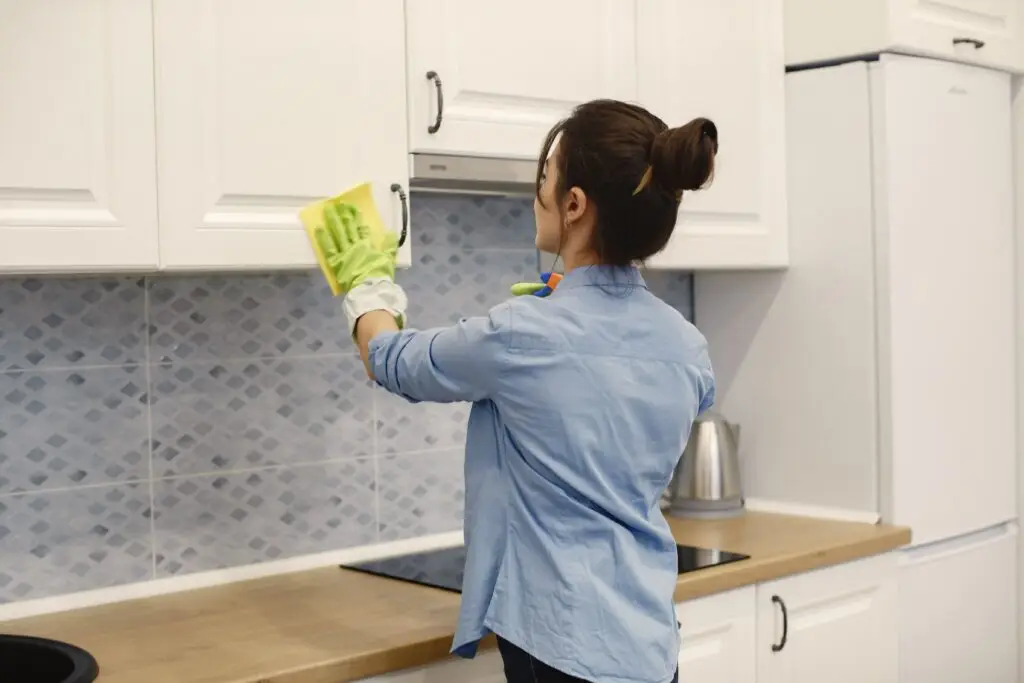
Quick Answer: The Safest Cabinet Degreasing Method
The safest and most effective way to degrease kitchen cabinets without damaging the finish is to mix warm water with a few drops of a high-quality, grease-cutting dish soap. Lightly dampen a soft microfiber cloth with the solution, gently wipe the greasy areas, then immediately wipe the surface with a second clean, damp cloth to rinse. Finally, buff the cabinet completely dry with a dry microfiber towel to prevent moisture damage and streaks.
Why Kitchen Cabinets Get Greasy
Cooking oils and airborne residue
When you fry, sauté, or boil food, microscopic droplets of cooking oil vaporize and float through the air. Once they cool, they settle directly onto the surfaces of your kitchen, creating a thin, sticky film on your upper and lower cabinets.
Dust sticking to grease
As airborne dust, pet dander, and pollen circulate through your kitchen, they latch onto the sticky layer of cooking oil on your cabinets. Over time, this combination hardens into a stubborn, murky grime that is difficult to wipe away with a dry cloth.
High-touch cabinet pulls and handles
Every time you open a drawer to grab a utensil or a cabinet to find a spice, natural oils from your skin, along with any food residue on your fingers, transfer directly to the handles and the wood immediately surrounding them.
Identify Your Cabinet Finish First
Painted cabinets
Painted wood or MDF cabinets require a gentle touch. Using harsh degreasers, acidic solutions, or abrasive scrubbing pads can easily soften, discolor, or chip the paint.
Finished wood cabinets
Wood cabinets are protected by a clear coat of varnish or polyurethane. It is crucial to avoid saturating them with water, as excess moisture can seep into the wood grain, causing the finish to warp, bubble, or peel.
Laminate cabinets
Laminate surfaces are generally highly durable and easy to wipe down. However, you must be careful not to let water pool near the edges or seams, as moisture can cause the laminate layers to separate from the core underneath.
High-gloss and thermofoil cabinets
These sleek, modern finishes reflect light beautifully but are highly susceptible to micro-scratches. You must use ultra-soft microfiber cloths and avoid any gritty cleaners to keep their mirror-like finish intact.
Step-by-Step Cleaning Process
Dust first
Before introducing any liquid, use a dry microfiber duster to remove loose dust, cobwebs, and pet hair from the cabinet doors and upper ledges. Wiping a dusty cabinet with a wet rag will only create a muddy, abrasive paste.
Use a mild degreasing solution
Mix warm water with a squirt of grease-cutting dish soap. Dip your cloth into the sudsy water and wring it out completely so it is only slightly damp, never dripping wet.
Wipe with the grain or finish direction
Gently wipe the greasy spots. If you have wood cabinets, always wipe in the direction of the wood grain to lift dirt out of the grooves without leaving streaks. For stubborn spots, let the soapy solution sit for a minute to break down the grease before wiping.
Rinse lightly and dry immediately
Take a separate cloth dampened only with clean water and wipe away the soapy residue. Immediately follow up with a dry microfiber cloth to buff the cabinet dry. Leaving water to air-dry is the number one cause of warped wood and bubbling finishes.
Products to Avoid on Cabinets
Never use abrasive scrubbers like steel wool or melamine sponges (magic erasers), as they will permanently sand away your cabinet’s protective finish. Avoid harsh chemicals like bleach, ammonia, and powdered cleansers. Additionally, be very cautious with undiluted white vinegar; while natural, its high acidity can slowly eat away at varnishes and paint if used too frequently.
How to Prevent Grease Buildup
Ventilation, Splatter Control, and Weekly Wiping
The best defense against greasy cabinets is preventing the grease from settling in the first place. Always turn on your stove’s exhaust hood before you start cooking to pull airborne oils out of the kitchen. Use a mesh splatter screen over frying pans to contain grease pops. Finally, adopt a weekly routine of quickly wiping down the cabinet doors closest to the stove. Keeping the right tools handy makes this effortless—check out our House Cleaning Supplies Checklist to ensure you have exactly what you need.
CTA: Offer professional recurring kitchen cleaning for busy Pennsylvania homes.
Are you tired of spending your weekends battling stubborn kitchen grease and detailing your appliances? Let Fabro Cleaning restore the shine to the heart of your home! We provide top-tier, recurring kitchen and home cleaning services for busy families across Pennsylvania. Whether it’s safely degreasing your delicate cabinets or getting your appliances spotless (be sure to read our guide on the Best Way to Clean Stainless Steel Appliances), we have you covered. Contact Fabro Cleaning today to schedule your professional cleaning service!
FAQ
What removes grease from cabinets?
A simple mixture of warm water and grease-cutting dish soap is the safest and most effective way to remove grease. For extremely heavy, old buildup, a specialized commercial cabinet degreaser may be used carefully according to the manufacturer’s instructions.
Can vinegar damage cabinets?
Yes. While vinegar is a popular natural cleaner, its acidic nature can dull, soften, or strip the clear protective finish or paint on your cabinets if used undiluted, left to sit too long, or used too frequently.
How often should cabinets be cleaned?
You should spot-clean the cabinets immediately surrounding your stove and trash can once a week. A thorough, kitchen-wide cabinet wipe-down should be done every one to three months depending on how often you cook.
Should you clean cabinet handles separately?
Yes. Cabinet handles and knobs are high-touch germ hotspots. Wipe them down frequently with a mild antibacterial wipe or soapy water, taking care not to let the cleaning liquid drip down onto the cabinet face.