
Quick Answer: Best Backsplash Cleaning Method
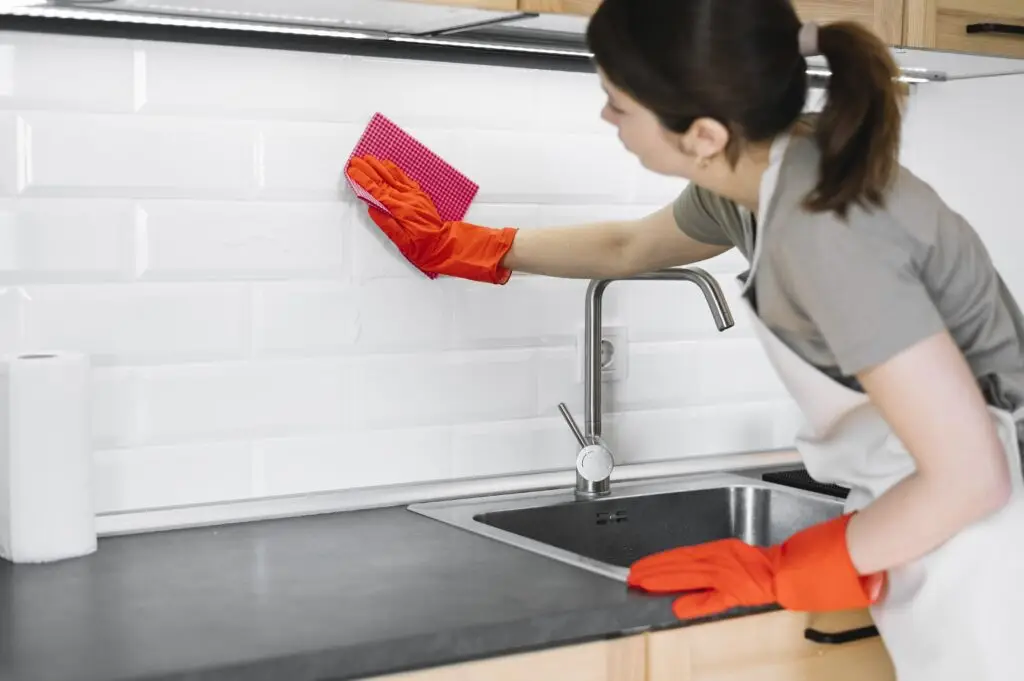
To clean your kitchen backsplash quickly and safely, spray a gentle solution of warm water and a few drops of dish soap or all-purpose cleaner onto the surface. Let it sit for a minute to penetrate grease splatters, then wipe down the tiles with a soft microfiber cloth. For stubborn grease or discolored grout lines, scrub gently with a soft-bristled brush, rinse with clean water, and buff dry to a streak-free shine.
Why Kitchen Backsplashes Collect Grease
Cooking splatter
Every time you fry chicken, sear steak, or simmer a heavy tomato sauce on the back burners, microscopic droplets of oil and sauce splatter outward, coating the wall directly behind your stove.
Steam and residue
Boiling water and steaming pots create vapor that carries airborne cooking oils across your kitchen. As this steam hits the cooler vertical surface of your backsplash, the moisture and grease condense together into a sticky film.
Grout absorption
Tile grout is naturally porous. Without a proper sealant, raw grout acts like a sponge, absorbing cooking oils, colored food splatters, and moisture, which quickly turns pristine white grout lines into a dingy gray or yellow.
Cleaning by Backsplash Material
Ceramic and porcelain tile
Ceramic and porcelain tiles are durable and resistant to most cleaning agents. You can safely clean them with warm soapy water, a mild vinegar solution, or an all-purpose kitchen spray without worrying about surface damage.
Glass tile
Glass backsplashes reflect light beautifully but show water spots and greasy smears instantly. Use a streak-free glass cleaner or a mixture of water and rubbing alcohol with a clean microfiber cloth to keep them crystal clear.
Natural stone
Natural stone materials like marble, granite, or slate are sensitive to acids. Never use vinegar, lemon juice, or harsh chemical cleaners, as they will etch and permanently dull the stone. Stick exclusively to pH-balanced stone cleaners or mild dish soap.
Stainless steel backsplash panels
Stainless steel panels require careful attention to avoid scratching. Always wipe in the direction of the metal grain using a mild soapy cloth, rinse with clean water, and dry immediately. For a polished finish, check out our guide on the Best Way to Clean Stainless Steel Appliances.
How to Clean Greasy Grout Lines
Use a soft brush
Apply a paste of baking soda and warm water to stained grout lines, and gently scrub using a soft-bristled toothbrush. Avoid stiff metal brushes that can erode the grout matrix.
Work in small sections
Tackle your backsplash in manageable sections so the cleaning solution or baking soda paste doesn’t dry out before you have a chance to wipe it away.
Rinse and dry to prevent streaks
Always follow up your cleaning process by wiping the entire wall with a clean, damp cloth to remove residual soap or baking soda, and dry with a microfiber towel.
What Not to Use on Backsplashes
Avoid harsh scouring pads, steel wool, and abrasive cleaning powders, which will permanently scratch glass, stone, and glossy ceramic tiles. Never use bleach on colored grout or natural stone, and avoid acidic vinegar solutions on marble or granite backsplashes.
Weekly Maintenance Tips
After-Cooking Wipe-Down Checklist
- Keep a spray bottle of mild soapy water and a microfiber cloth near the sink.
- Wipe down the backsplash behind the stove right after cooking heavy or greasy meals before oil has a chance to harden.
- Clear away stray sauce splatters with a damp sponge during your nightly kitchen cleanup.
- Pair your backsplash routine with other high-impact kitchen habits, such as wiping down your upper and lower units (learn more in our guide on How to Clean Greasy Kitchen Cabinets Without Damage) and keeping your sink area fresh (explore the Best Way to Clean a Garbage Disposal).
Tired of battling grease splatters, sticky grout lines, and fingerprint-smudged appliances all by yourself? Let Fabro Cleaning handle the hard work! Whether you need a top-to-bottom kitchen deep clean or consistent recurring maintenance to keep your home pristine, our professional Pennsylvania cleaning team delivers sparkling results. Contact Fabro Cleaning today to schedule your cleaning service and enjoy a spotless kitchen effortlessly!
FAQ
How do you remove grease from backsplash tile?
Spray the tiles with warm soapy water or a gentle degreasing spray, let it sit for a minute to break down the oil film, and wipe it away with a soft microfiber cloth.
Can vinegar clean grout?
Yes, diluted white vinegar can help clean ceramic tile grout, but you must avoid using it if your backsplash features natural stone like marble or limestone, as the acid will etch the surface.
How often should kitchen grout be cleaned?
Spot-clean food splatters immediately after cooking, give your backsplash a thorough wipe-down weekly, and perform a deep-clean and scrub of your grout lines every three to six months.
What cleaner is safe for stone backsplash?
Only use pH-balanced stone cleaners or warm water mixed with a single drop of mild dish soap. Never use acidic cleaners like vinegar, lemon juice, or commercial bleach on natural stone.