
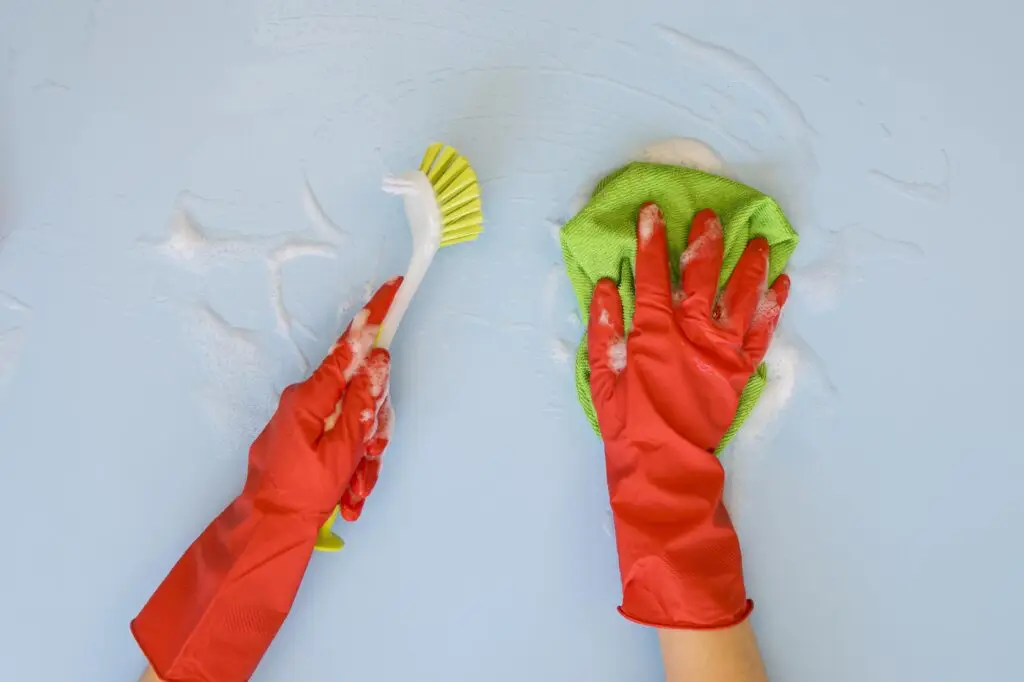
Your walls are the largest surface area in your home, yet they are often the most overlooked during a routine cleaning. Over time, they collect dust, airborne oils, fingerprints, and accidental scuffs that dull your home’s aesthetic. However, cleaning painted walls is a delicate balance; use the wrong pressure or chemical, and you risk “burnishing” the finish or stripping the color entirely. At Fabro Cleaning, we approach every wall as a unique surface that requires a gentle, calculated touch.
Quick Answer: What Is the Safest Way to Clean Painted Walls?
The safest method is to use a very mild solution of warm water and a drop of gentle dish soap, applied with a soft microfiber cloth or sponge. Always “less is more”—start with the least amount of moisture possible, avoid harsh scrubbing, and work from the top of the wall down to prevent streaks.
Why Painted Walls Need Gentle Cleaning
Paint—especially modern latex-based wall paint—is porous. Harsh chemicals can break down the binder that holds the color together, while abrasive scrubbers can create “shiny spots” (burnishing) in matte or eggshell finishes. When you clean a wall, your goal is to lift surface debris without altering the reflective quality of the paint.
Know Your Finish: The “Cleanability” Guide
The higher the sheen, the more durable the paint.
- Flat/Matte Paint: These have the least amount of resin. They are highly susceptible to “rubbing off.” Use only the lightest dusting or a slightly damp (never wet) cloth.
- Eggshell Paint: Slightly more durable than flat, but still delicate. Treat it with the same care as matte paint.
- Satin/Semi-Gloss: These are your workhorses. The higher resin content makes them resistant to moisture and light scrubbing, making them ideal for high-traffic zones.
The Fabro Cleaning Toolkit
- Microfiber Cloths: The gold standard for trapping dust without scratching.
- Soft Cellulose Sponge: Essential for spot cleaning where a cloth doesn’t provide enough surface area.
- Mild Liquid Dish Soap: Choose a clear, fragrance-free formula to avoid leaving residue or dyes behind.
- Two-Bucket System: One bucket for your soapy solution, one for clean rinsing water.
Step-by-Step Wall Cleaning
- Dusting is Mandatory: Never get a wall wet until you have dusted it. If you add water to a layer of dust, you just create “wall mud” that is twice as hard to remove. Use a microfiber duster or a vacuum with a soft brush attachment.
- The Spot Test: This is non-negotiable. Find a corner behind a door or near the baseboard and test your soap solution. Wait for it to dry completely to ensure the paint color doesn’t shift or dull.
- Wipe, Don’t Scrub: Use a light touch. Work in small circular motions. If the dirt is stubborn, let the soapy water sit for 30 seconds to break down the grime rather than using physical force.
- Rinse: Paint residue (soap) attracts dirt. Always follow your wipe-down with a second pass using a cloth dampened only with clean water.
- Dry: Use a clean, dry microfiber towel to soak up any remaining moisture. Leaving a wall to “air dry” can cause water streaking, especially on darker colors.
Dealing with Scuff Marks
For black rubber scuffs (often from shoes or furniture), avoid abrasive sponges. Try a dry melamine foam sponge (Magic Eraser) only if the paint is a higher sheen (Satin or Semi-Gloss), and use an extremely light touch. For Flat or Eggshell finishes, a small amount of “spot-priming” with the original paint is often safer than trying to scrub the mark out.
What Not to Use
- Bleach or Ammonia: These will discolor paint and degrade the chemical structure of the film.
- Abrasive Scourers: Steel wool or green “scrubby” sponges will permanently scratch the finish.
- Excessive Water: Water can seep behind baseboards or outlet plates, leading to peeling or mildew.
How Often to Clean?
- Dusting: Every two weeks (the same time you vacuum).
- Full Wash: Once every 6 to 12 months, or as needed in high-traffic areas like hallways, kitchens, and mudrooms.
When Professional Cleaning Helps
If you are preparing your home for sale, moving out, or dealing with high-reaching walls and ceilings, DIY cleaning can become a safety hazard or an aesthetic risk. Fabro Cleaning specializes in whole-home maintenance, including delicate wall treatments that restore your home’s “just painted” look without the risk of damage.
FAQ
What is the best thing to wash painted walls with?
Warm water mixed with a small drop of mild, clear dish soap is the safest and most effective solution for almost all wall paints.
Can vinegar damage painted walls?
It can. Vinegar is an acid and, if used too frequently or in too high a concentration, it can dull the sheen of your paint or break down the finish over time.
Does Magic Eraser remove wall paint?
Yes. Melamine sponges are essentially fine sandpaper. They will “sand off” the layer of paint along with the dirt, which is why they should be used with extreme caution—and only on higher-sheen paints.
How do you clean flat painted walls?
Use the “dry” method first—dusting and vacuuming. If you must wash, use the barest minimum of moisture and never scrub; pat the dirt gently with a damp (not dripping) cloth.
How often should walls be cleaned?
Dusting should happen bi-weekly. Deep washing should be reserved for your seasonal cleaning schedule, or whenever you notice visible buildup in high-touch areas.
Need your home to feel truly fresh? At Fabro Cleaning, we combine professional techniques with a gentle touch to keep your home’s surfaces pristine. Click here to get a free estimate from Fabro Cleaning today and let us take the “heavy lifting” out of your home maintenance!