
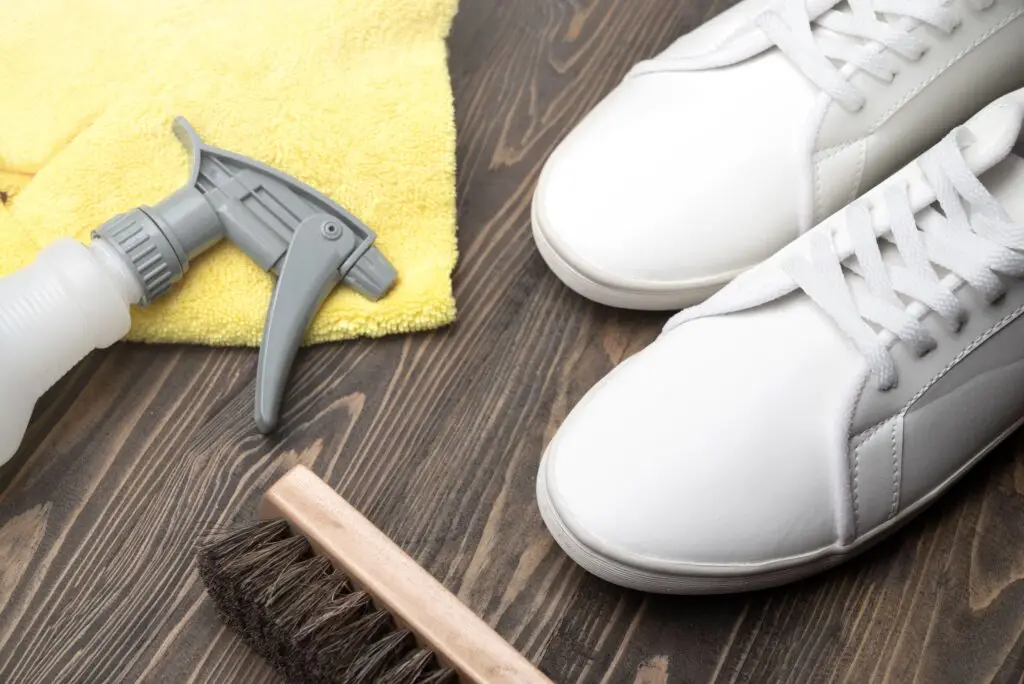
There is nothing quite like the crisp, clean look of a pair of fresh white shoes. Unfortunately, they are also magnets for dirt, scuffs, and stubborn stains. While it’s tempting to toss them into the washing machine and hope for the best, that’s a quick way to ruin the glue, warp the shape, or cause permanent yellowing.
At Fabro Cleaning, we believe in the “gentle but thorough” approach. Here is your professional guide to restoring your favorite white sneakers to their former glory without causing damage.
Quick Answer: The Safest Way to Clean White Shoes
The safest method for almost all white shoes is a hand-wash using a mild solution of warm water and a drop of gentle dish soap. Avoid harsh chemicals, high-heat dryers, and excessive soaking. By cleaning by hand, you maintain control over the process, protecting the delicate materials and adhesives that hold your shoes together.
Check the Shoe Material First
Before you start, identify the material. Cleaning a leather sneaker requires a vastly different approach than cleaning a canvas one.
- Canvas: Durable but porous; tends to absorb stains deep into the fibers.
- Leather: Requires non-abrasive cleaners; too much water can cause the leather to crack or dry out.
- Suede or Nubuck: Highly delicate; never use water. These materials require specialized dry-cleaning brushes and erasers.
- Rubber Soles and Laces: These are the most resilient parts of the shoe and can handle more aggressive scrubbing.
Best Supplies for Cleaning White Shoes
Keep your cleaning kit simple and effective:
- A soft-bristled brush (or an old, clean toothbrush).
- A microfiber cloth.
- Gentle dish soap (like Dawn).
- Baking soda.
- A “Magic Eraser” (use sparingly on rubber only).
- White vinegar (for tough stains).
How to Clean White Shoes Step by Step
- Remove Dry Dirt First: Before getting anything wet, use a dry brush to knock off caked-on mud. If you skip this, you’ll just turn the dry dirt into a muddy mess that soaks deeper into the fabric.
- Spot Treat Stains: Mix a small paste of baking soda and water and apply it to the most visible scuffs. Let it sit for 15 minutes.
- Clean the Upper Material: Dip your brush into your soap-and-water solution. Work in small, circular motions. Don’t saturate the shoe—just keep the brush damp.
- Scrub Soles and Edges: The rubber side-walls can handle a bit more force. Use a Magic Eraser or a stiffer brush here to remove black scuffs.
- Wash or Replace Laces: Remove the laces and soak them in a bowl of soapy water. If they are permanently yellowed, it’s often cheaper and easier to just buy a new pair.
- Air Dry the Right Way: Never use a dryer. Heat ruins glue. Stuff the shoes with white paper towels (to absorb moisture and hold their shape) and let them air dry in a cool, shaded spot. Avoid direct sunlight, which can cause yellowing.
Can You Use Bleach on White Shoes?
Generally, no. While bleach is a powerful whitener, it is also a harsh chemical that can cause white fabric to turn a sickly, permanent yellow. It can also weaken synthetic fibers and dissolve glues. If you absolutely must use a whitener, opt for a dedicated sneaker whitening solution rather than laundry bleach.
Baking Soda, Vinegar, Toothpaste, or Dish Soap: What Works Best?
- Dish Soap: The MVP for daily cleaning. Safe for almost all materials.
- Baking Soda & Vinegar: Excellent for deep-cleaning canvas shoes, but rinse thoroughly to avoid residue.
- Toothpaste: Only use white non-gel toothpaste. The whitening agents can help, but it’s essentially an abrasive, so use it carefully on rubber soles only.
Common Mistakes That Turn White Shoes Yellow
- Drying in the Sun: UV light + residual soap = yellow oxidation. Keep them out of direct sunlight while drying.
- Over-Soaking: Excessive water allows dirt and soap to seep deep into the foam padding of the shoe, where it’s impossible to rinse out.
- Using Too Much Detergent: Leftover soap residue attracts new dirt faster once you start wearing them again.
How Often Should You Clean White Shoes?
If you wear them daily, a quick “spot clean” once a week will prevent stains from setting. A full deep-clean should happen once a month, depending on weather and wear.
When Regular Home Cleaning Is Not Enough
Sometimes, despite your best efforts, shoes simply don’t come back to life. If your shoes have deep set-in grease stains, oil damage, or are made of premium materials like delicate suede, it’s best to consult a professional shoe cleaner. They have access to professional-grade solvents and equipment that can restore shoes that look like they belong in the trash.
FAQ
How do you get white shoes white again?
A mixture of baking soda and water applied as a paste, followed by a gentle scrub with a toothbrush, is the most effective way to restore brightness.
Can baking soda clean white shoes?
Yes, it is excellent for canvas shoes. It acts as a gentle abrasive and helps lift stubborn grime.
Can I put white shoes in the washing machine?
Avoid it. Even if they survive one wash, the agitation and heat from a machine will significantly shorten the lifespan of your shoes by breaking down the glue.
How do you clean white leather shoes?
Use a damp cloth with a tiny drop of dish soap. Never let the leather get soaked. Follow up with a leather conditioner to keep the material supple.
How do you remove yellow stains from white shoes?
Yellowing is usually caused by soap residue or sun exposure. Try a 50/50 mix of white vinegar and water, wipe it over the surface, and let them dry in a dark, well-ventilated area.
Is your home or wardrobe in need of a professional touch? At Fabro Cleaning, we take the stress out of maintenance. Whether you need your home sanitized or your most prized items treated with care, our team is dedicated to excellence.
Click here to contact Fabro Cleaning for a professional service quote today!