
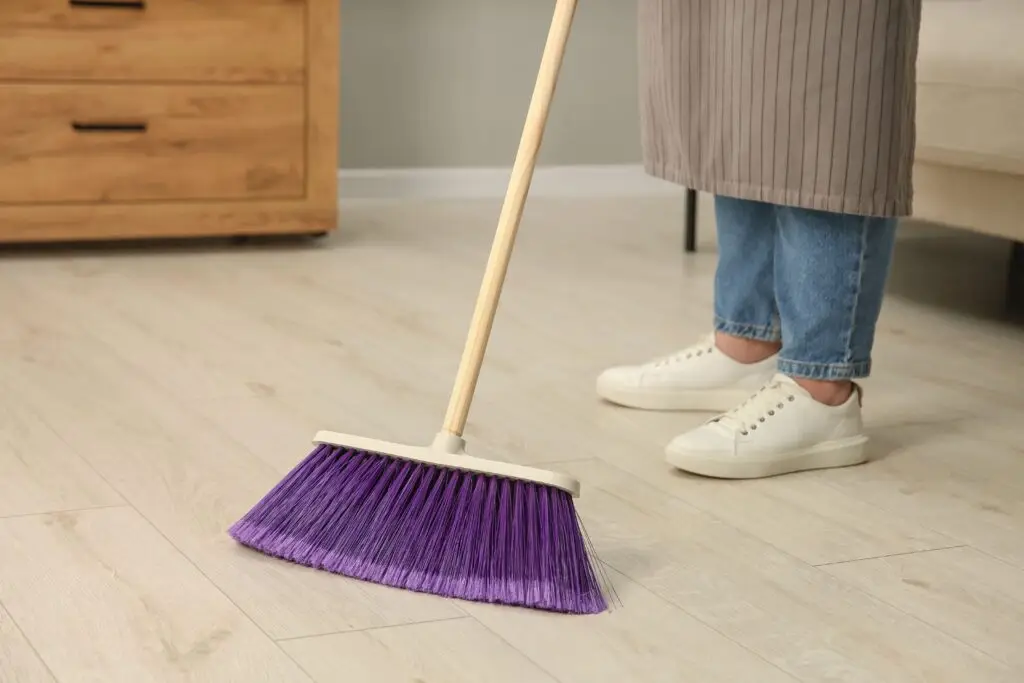
Sweeping may seem like a simple task, but doing it the right way is the foundation of a truly clean home. Proper technique not only removes more debris but protects your flooring from premature wear. At Fabro Cleaning, we prioritize these expert practices to ensure every surface we touch is pristine.
Why Proper Sweeping Technique Matters
Dust control
Incorrect sweeping sends clouds of dust back into the air, where it eventually settles on your furniture and surfaces again. Proper technique captures dust rather than redistributing it.
Floor protection
Dragging grit and debris across hardwood or vinyl floors acts like sandpaper, causing micro-scratches. Correct sweeping prevents this unnecessary damage.
Easier mopping and vacuuming
When you sweep thoroughly, you remove the abrasive particles that can make mopping difficult or damage a vacuum cleaner’s brush roll, allowing for more effective secondary cleaning.
Best Tools for Sweeping Floors
Broom types
- Flagged-tip bristles (Soft): Ideal for fine dust on smooth, indoor floors.
- Stiff-bristle brooms: Better for rougher surfaces like garage floors or textured tile.
Dustpan features
Look for a dustpan with a rubber edge that sits flush against the floor. This prevents the “line of dust” that always seems to remain after you finish sweeping.
Microfiber dust mops
For large, open areas with hard flooring, a microfiber dust mop is often superior to a broom. It uses static charge to “grab” dust rather than pushing it around.
Step-by-Step: How to Sweep the Floor
- Clear the area: Move chairs, rugs, and any low-lying obstacles to ensure you can reach every inch.
- Start from corners and edges: Use the edge of the broom to pull debris out from baseboards and corners toward the center of the room.
- Sweep toward one collection point: Choose a central area or a corner of the room to gather all your piles.
- Use short controlled strokes: Long, aggressive swipes kick up dust. Short, gentle strokes keep the debris on the floor and moving forward.
- Dispose of dust properly: Use your dustpan to collect the pile, and hold the pan firmly against the floor to ensure everything is captured.
Sweeping Different Floor Types
- Hardwood floors: Always use a soft-bristled broom or microfiber dust mop to avoid scratching the finish.
- Tile floors: Use a broom to reach into the grout lines where dust and food particles often hide.
- Vinyl floors: These are prone to scratches, so use gentle, sweeping motions and avoid abrasive tools.
- Kitchen and entryway: These high-traffic zones require extra attention. Pay special attention to the baseboards where grit accumulates most heavily.
Common Sweeping Mistakes
- Using a dirty broom: If your broom is clogged with hair and dust, it will just leave streaks behind. Clean your broom bristles regularly.
- Sweeping too fast: Speed creates air turbulence, which causes dust to become airborne. Slow down!
- Skipping corners and baseboards: This is where the majority of allergens and dust bunnies congregate.
Sweeping vs Vacuuming vs Mopping
- Sweeping: Best for daily maintenance, dry spills, and quick cleanups on hard floors.
- Vacuuming: Ideal for carpets and rugs; also excellent for hard floors if you have pets or heavy traffic, as it prevents dust from becoming airborne.
- Mopping: Should always be the final step to remove sticky residue and disinfect, but never mop without sweeping first!
FAQ
What is the correct way to sweep a floor?
The correct way is to use short, controlled strokes, starting at the edges and working toward a central collection point to prevent dust from becoming airborne.
Is sweeping better than vacuuming?
For hard floors, they are different tools. Vacuuming is generally more efficient at capturing fine particles without spreading them into the air, but sweeping is faster for daily debris.
How often should floors be swept?
High-traffic areas like entryways and kitchens should be swept daily; other rooms can be maintained with twice-weekly sweeps.
Should you sweep before mopping?
Yes, always. If you mop without sweeping, you will turn the dust and debris into wet mud, which is much harder to clean.
What broom is best for indoor floors?
A broom with soft, flagged-tip bristles is best for indoor hard floors because it is gentle on the surface and effectively traps fine dust.
At Fabro Cleaning, we take the hassle out of floor care. Whether you need a one-time deep clean or regular maintenance, our team is ready to help across Bucks, Montgomery, Chester, and Philadelphia Counties.