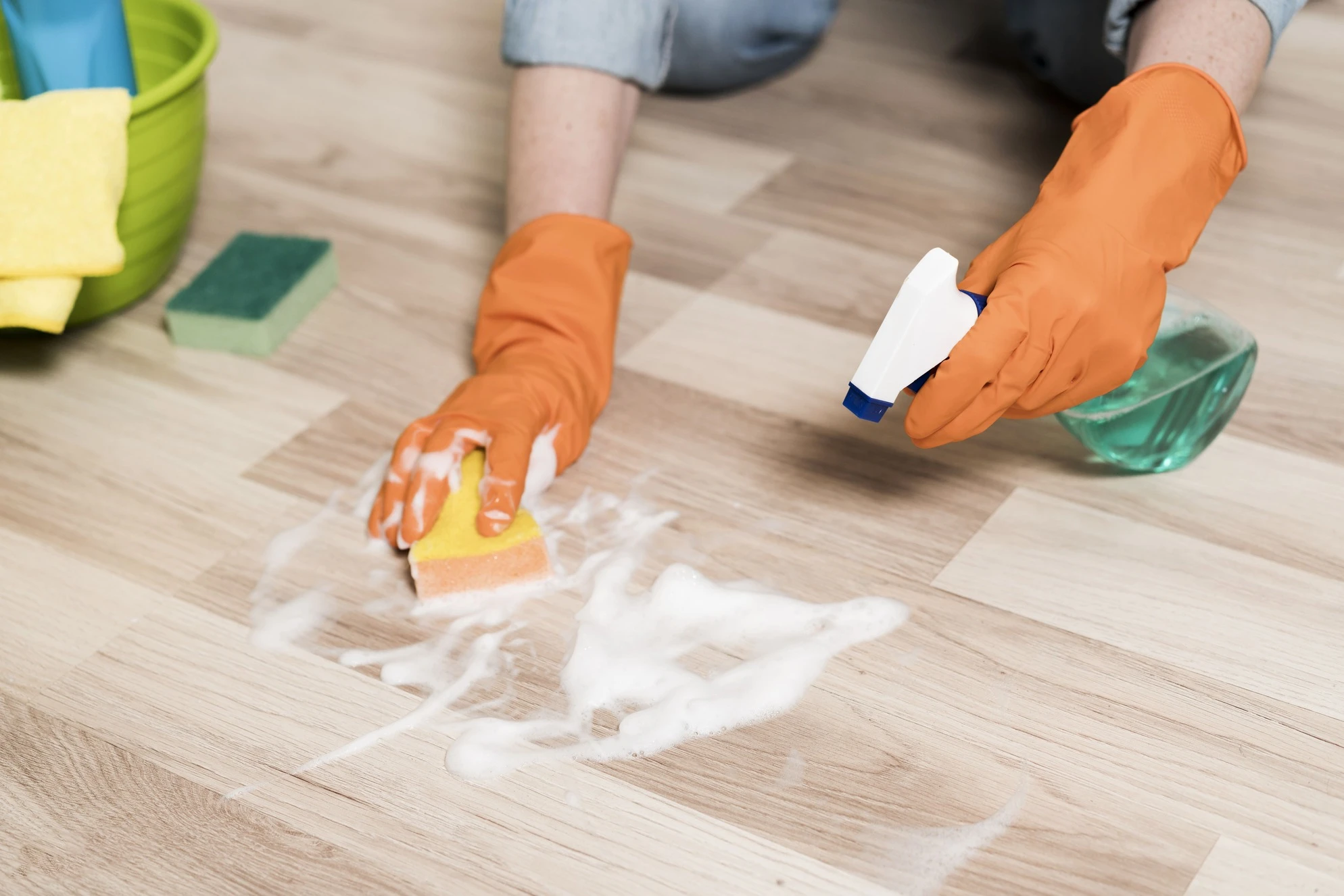
Hardwood floors are one of the most significant investments in an American home, often adding thousands of dollars to property value. However, maintaining that classic luster requires a delicate balance. Using the wrong chemicals can strip the finish, while too much moisture can cause permanent warping or "cupping." This guide provides safe, laboratory-tested DIY methods to keep your floors pristine without the use of harsh, industrial toxins.
The golden rule for hardwood floor care is: Moisture is the enemy. Whether your floors are solid oak, maple, or engineered cherry, you should never "wet mop" in the traditional sense. The most effective DIY approach uses a nearly dry microfiber pad and a pH-neutral solution. By keeping ingredients gentle, you preserve the polyurethane or wax seal that protects the organic wood underneath.
You don't need expensive, boutique chemicals to achieve a streak-free shine. Most professional cleaners recommend a solution that mimics the pH of the floor's finish.
This is the safest "universal" cleaner for 95% of modern wood floors.
Vinegar is a controversial topic in the flooring industry. However, it can be used effectively to cut through salt film or mineral deposits left by hard water.
Avoiding the wrong products is just as important as choosing the right ones. Many common household "hacks" can lead to expensive refinishing bills.
While popular in US households for tile and laminate, steam mops are disastrous for hardwood. The high-pressure steam forces moisture deep into the wood fibers and joints. Over time, this leads to "cloudy" finishes, peeling, and buckling.
Never use a string mop or a sponge mop that leaves puddles. If water seeps between the planks, the wood will swell. In the US, where HVAC systems often fluctuate humidity levels, this added moisture can accelerate structural damage to the subfloor.
Avoid any cleaners containing ammonia, bleach, or abrasive scouring powders. These are high-pH substances that will chemically "burn" the finish, leaving it cloudy and brittle. Avoid "oil soaps" that promise a glow; they often leave a waxy buildup that attracts more dirt and makes future professional recoating impossible.
A consistent maintenance schedule is the best way to prevent the "sandpaper effect"—where small particles of grit are ground into the wood by foot traffic.
Sometimes, DIY methods aren't enough. If your floors have lost their luster despite regular cleaning, they may have a buildup of old products or deep-set scratches.
Only in extreme moderation and only on sealed floors. Because vinegar is an acid, it can slowly break down the chemical bonds of a polyurethane finish if used in high concentrations or too frequently.
Yes. Bona is a highly respected, GREENGUARD-certified brand in the US. If you prefer a pre-mixed solution over a DIY recipe, Bona is the industry standard for pH-neutral wood care.
For stubborn spots like tape residue or spilled syrup, use a drop of the soap concentrate directly on a damp cloth. Rub gently in the direction of the grain. For wax or gum, place an ice cube in a plastic bag over the spot until it hardens, then gently pop it off with a plastic scraper.
Protect Your Investment with Fabro Cleaning
Your hardwood floors deserve the best care possible to maintain their beauty for generations. If your floors need more than just a light mop, or if you want to ensure your home is treated with the highest industry standards, we are here to help.
Contact Fabro Cleaning today for a professional floor evaluation and a free service quote!